

科莫湖旅游指南
This in-depth 科莫湖旅游指南 is written for travellers who want clear, practical information to plan a real trip, not just a list of pretty photos. Lake Como (Lago di Como) in northern Italy is famous for its mountains, villas and elegant lakeside towns, but many visitors are unsure how to choose where to stay, how to travel around the lake, or how to organise a day trip from Milan. This guide walks you through those decisions in order, then points you to a dedicated, more detailed guide for each one.
本指南内容
1. Lake Como in Two Minutes
If you only read one part of this guide, read this table. It matches common traveller situations to a sensible base and way of getting around.
| 如果你是…… | Best base | 最好的方法 | 提示 |
|---|---|---|---|
| 第一次旅行,几天 | Varenna 或 Bellagio | 渡轮 + 火车 | 看看几栋别墅和两三个村庄;别把整个湖都匆忙走遍 |
| 无车旅行 | Como 或 Varenna | 火车加轮渡 | 两者都有水边车站;最简单的无车基地 |
| 只有一天 | Central lake (Bellagio · Varenna · Menaggio) | 渡轮 | 选择湖中三角区域;抵制住想看遍一切的冲动 |
| 别墅与花园 | Central-west (Lenno · Tremezzo) | 轮渡 + 短途步行 | 提前预订贝佳娜别墅 |
| 奢华还是浪漫 | Bellagio or Cernobbio | 私人船只/接送 | 旺季提前预订 |
| 低预算 | Lecco, Como or Argegno | 火车 + 渡轮通票 | 淡季人少又便宜 |
A quick orientation — the sections below go deeper on each choice. Ferry and train frequencies vary by season, so check current timetables before you travel.
2. Understand the Lake
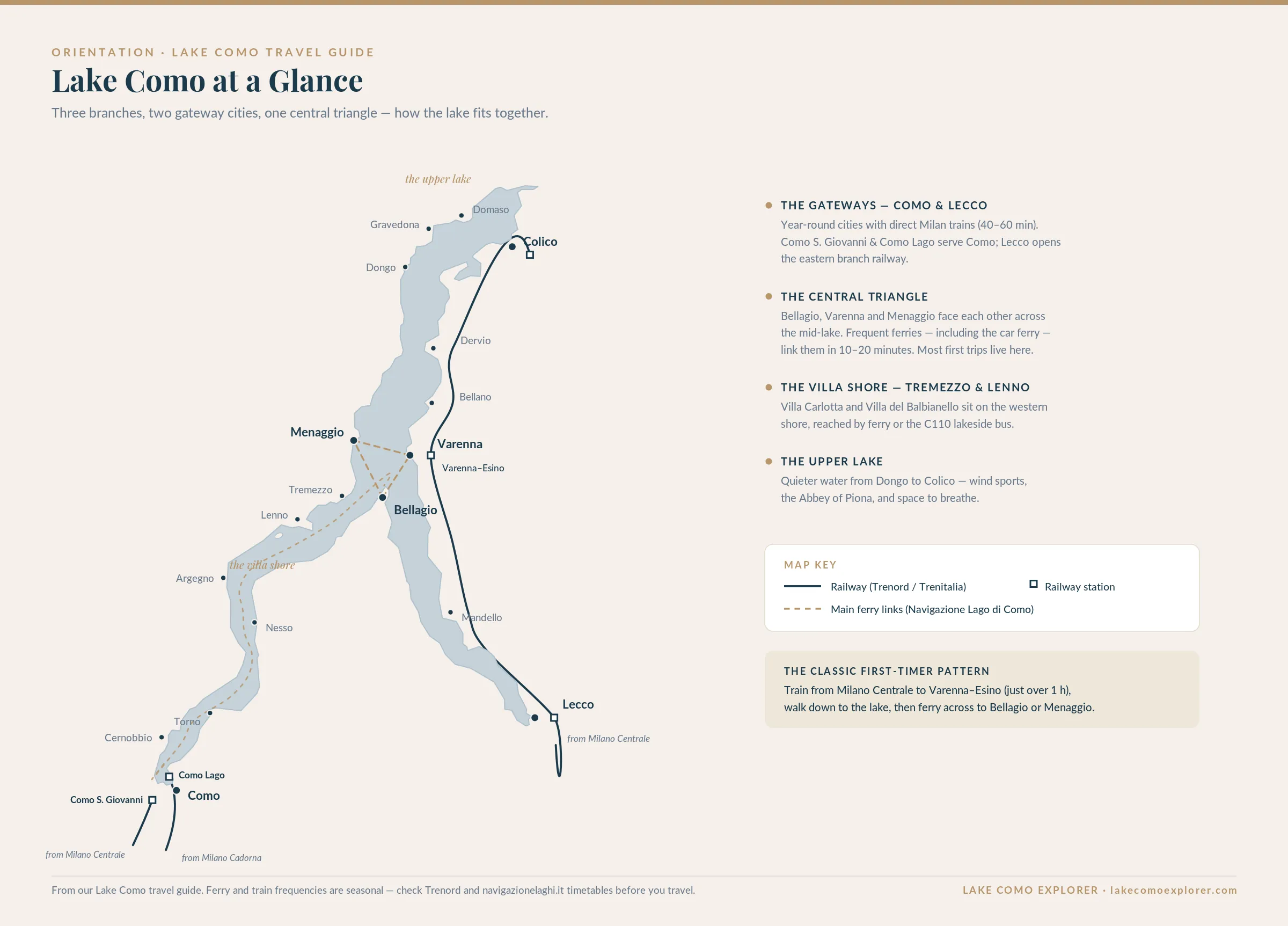
科莫湖(意大利语:Lago di Como)呈现出独特的倒“Y”形结构。了解这一形状以及湖区的基本布局,会让规划科莫湖之旅时的其他所有决策都变得更加简单。
西南支:延伸至科莫市,在英文旅行指南中常被称为“Como town”。
东南支:延伸至莱科(Lecco),这是科莫湖畔的另一座本地城市。
北支:指向阿尔卑斯山,并延伸至科利科(Colico)一带的科莫湖北部地区。

在湖区中央、三条支流交汇之处,便是著名的湖中央三角区——贝拉焦(Bellagio)位于半岛尖端,而瓦伦纳(Varenna)与梅纳焦(Menaggio)隔湖相望。附近的特雷梅佐(Tremezzo)和伦诺(Lenno)等村庄沿着科莫湖西岸分布,拥有一些最重要的历史别墅。
地图上看距离不远,但科莫湖沿岸道路狭窄,交通往往较慢。实际出行中,环湖旅行通常最适合结合使用渡船、当地火车以及短途公交。
规划捷径:科莫(Como)和莱科(Lecco)是主要门户;贝拉焦、瓦伦纳和梅纳焦构成中央三角区;特雷梅佐(Tremezzo)和伦诺(Lenno)代表以别墅为主的西岸区域。按这些区域来理解湖区,行程规划会简单得多。
3. Choose Where to Base Yourself
Most trips work best from one base, with day trips to the rest of the lake. Here is a short, honest read on the main towns most first-time visitors consider — each has its own full guide if you want the detail.
Como is the lake’s grand gateway city — a Gothic Duomo, the Brunate funicular, Villa Olmo and a long silk-weaving history. It’s the easiest base if you’re arriving by train and want a real city around you as well as the lake.
Bellagio sits exactly where the lake divides into its two southern arms, and its stepped alleys, villa gardens and harbour have earned it the nickname “Pearl of the Lake.” It’s the most romantic base, and also the busiest in peak season.
Varenna, on the eastern shore, keeps its fishing-village character with a quieter waterfront than Bellagio directly across the water. A good pick if you want the central-lake location without the crowds.
Menaggio sits mid-lake on the western shore, facing Bellagio and Varenna, with a lakefront promenade, castle ruins and gorge walks nearby. A practical, less formal base with good ferry connections in every direction.
Tremezzo, further up the western shore facing Bellagio, is built around Villa Carlotta’s gardens and the lakefront Greenway path. The natural choice if villas and gardens are the main reason for your trip.
Lenno is the quiet bay next to Villa del Balbianello, with its own small beach and the Greenway running through it. Best for travellers who want to be a short walk from Balbianello without staying in a busier town.
Lecco, on the south-eastern branch, is the lake’s literary city — home to Alessandro Manzoni, with a medieval bridge and a dramatic mountain backdrop. Generally calmer and better value than the central-lake towns.
For a full side-by-side comparison and help narrowing it down, see our guide to where to stay in Lake Como.
4. Choose How to Move
Once you know your base, the next decision is how you’ll get to Lake Como and move around it. In short: the train from Milan reaches Como or Varenna directly; ferries are the main way to move between lakeside towns once you’re here; and a car is only worth it if you plan to explore the smaller back roads and hilltop villages, since parking is limited and roads along the shore are narrow.
For the details you’ll actually need on the day — routes, ticket types and timing — see our 渡轮指南, our guide to driving and parking around Lake Como, and our guide to getting from Milan and the airports to Lake Como.
科莫湖渡轮时刻表和一日游计划
湖上每一站的实际出发时间。.
5. Choose the Season
Lake Como changes noticeably through the year. Late spring and early autumn generally offer the most comfortable balance of weather and crowds; summer is warmest and busiest, especially around Bellagio in August; winter is quiet, with some seasonal businesses closed, but the towns themselves stay open and the mountain views can be at their clearest. Rain is possible in any season, so it’s worth having a backup plan rather than building a day entirely around being outdoors.
For a season-by-season breakdown, see our guide to the 游览科莫湖的最佳时间. If your dates land on a wet day, our guide to Lake Como when it rains has a practical backup plan.
6. Choose How Much to Include
The most common planning mistake on Lake Como isn’t picking the wrong town — it’s trying to see too many of them in one day. The lake rewards a slower pace: two or three towns and one villa is a realistic, enjoyable day; five towns in one day usually means a lot of time on ferries and train platforms and very little time actually in any of them. If you only have one day, build it around the central triangle (Bellagio, Varenna, Menaggio) rather than trying to reach the whole lake.
7. Start with the Right Detailed Guide
Each decision above has its own in-depth guide. Start with whichever one matches what you still need to plan.