

코모 호수 여행 가이드
This in-depth 코모 호수 여행 가이드 is written for travellers who want clear, practical information to plan a real trip, not just a list of pretty photos. Lake Como (Lago di Como) in northern Italy is famous for its mountains, villas and elegant lakeside towns, but many visitors are unsure how to choose where to stay, how to travel around the lake, or how to organise a day trip from Milan. This guide walks you through those decisions in order, then points you to a dedicated, more detailed guide for each one.
이 가이드에서 다루는 내용
1. Lake Como in Two Minutes
If you only read one part of this guide, read this table. It matches common traveller situations to a sensible base and way of getting around.
| 만약 당신이… | 추천 숙박지 | 최고의 방법 | 팁 |
|---|---|---|---|
| 첫 여행, 며칠 | 바레나 또는 벨라지오 | 페리 + 기차 | 빌라 두어 곳과 마을 두세 곳을 보세요. 호수 전체를 서두르지 마세요. |
| 차 없이 여행하기 | 코모 또는 바레나 | 기차 + 페리 | 둘 다 물가에 역이 있고, 가장 쉬운 차 없는 거점입니다. |
| 하루만 | Central lake (벨라지오 · 바레나 · 메나조) | 페리 | 호수 가운데 삼각지점을 선택하세요. 모든 것을 보려고 애쓰지 마세요. |
| 빌라와 정원 | Central-west (레노(Lenno) · 트레메초) | 페리 + 짧은 산책 | 빌라 델 발비아넬로 미리 예약하기 |
| 고급 또는 로맨스 | 벨라지오 or Cernobbio | 개인 보트 / 이동 | 성수기에는 미리 예약하세요 |
| 저예산 | 레코, 코모 or Argegno | 기차 + 페리 통행권 | 견적이 더 조용하고 저렴합니다 |
A quick orientation — the sections below go deeper on each choice. Ferry and train frequencies vary by season, so check current timetables before you travel.
2. Understand the Lake
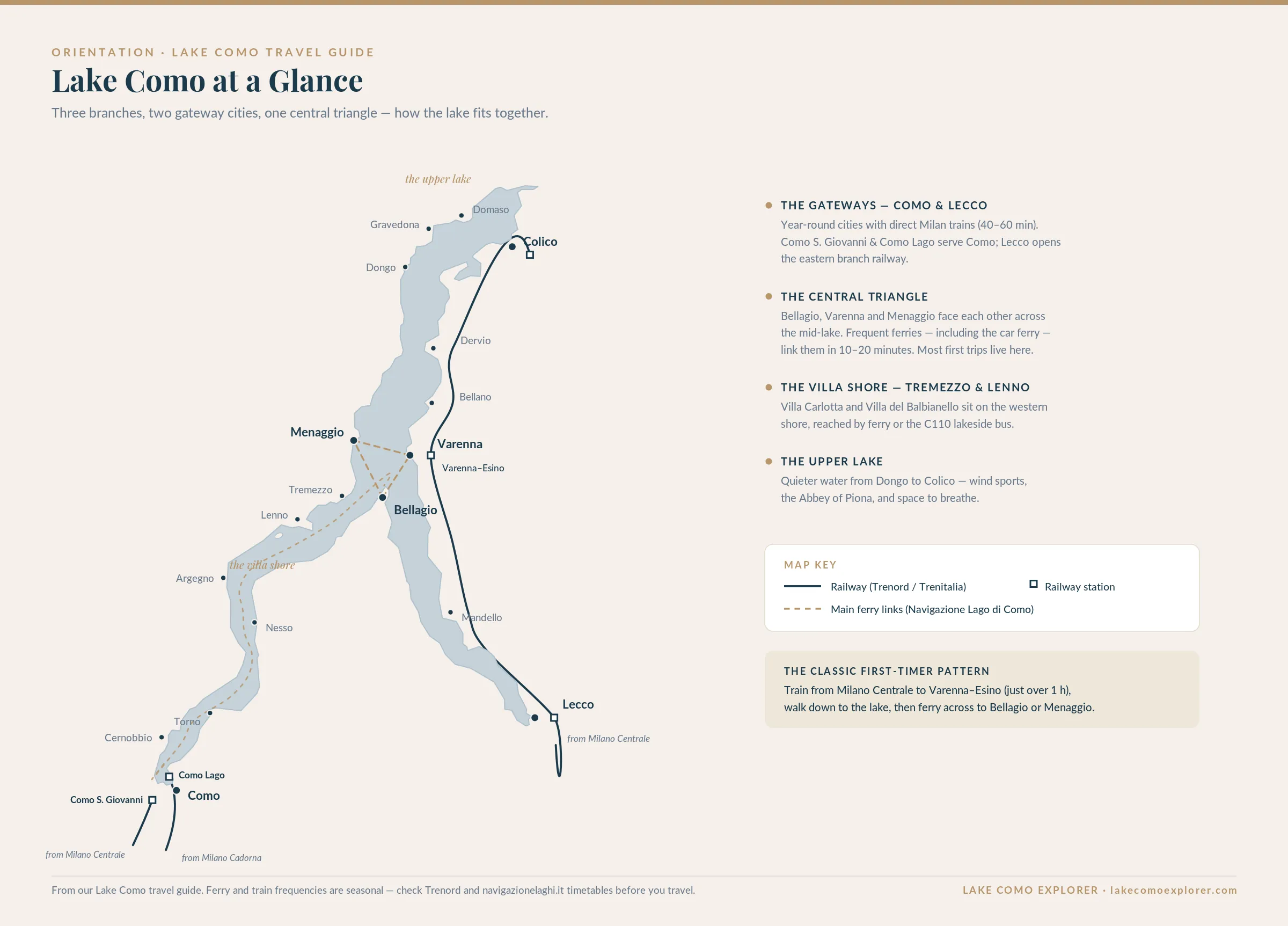
코모 호수(이탈리아어: Lago di Como)는 거꾸로 된 ‘Y’자 형태를 가진 독특한 지형을 지니고 있습니다. 이 형태와 호수의 기본 구조를 이해하면 코모 호수 여행을 계획할 때 다른 모든 결정이 훨씬 쉬워집니다.
남서쪽 지류: 코모 시에서 끝나며, 영어 여행 가이드에서는 흔히 “Como town”이라고 불립니다.
남동쪽 지류: 레코에서 끝나며, 코모 호수에 위치한 또 다른 현지 도시입니다.
북쪽 지류: 알프스 방향으로 이어지며, 콜리코(Colico) 주변의 코모 호수 북부 지역으로 뻗어 있습니다.

세 갈래가 만나는 호수의 중심부에는 유명한 미드 레이크 트라이앵글이 있으며, 반도 끝에는 벨라조가 자리하고 바렌나와 메나지오가 호수를 사이에 두고 서로 마주 보고 있습니다. 인근의 트레메초와 렌노 같은 마을들은 코모 호수 서쪽 해안을 따라 이어지며, 그중에는 가장 중요한 빌라들이 자리하고 있습니다.
지도에서는 거리가 짧아 보이지만, 코모 호수 해안을 따라 난 도로는 좁고 교통이 느린 경우가 많습니다. 실제로 코모 호수를 이동할 때는 페리, 지역 열차, 짧은 버스 이동을 조합하는 방식이 가장 효율적인 경우가 많습니다.
계획 요약: 코모와 레코는 주요 관문이며, 벨라조·바렌나·메나지오는 중앙 삼각 지대를 이룹니다. 트레메초와 렌노는 빌라 중심의 서쪽 해안을 대표합니다. 호수를 이러한 구역으로 이해하면 여행 계획이 훨씬 쉬워집니다.
3. Choose Where to Base Yourself
Most trips work best from one base, with day trips to the rest of the lake. Here is a short, honest read on the main towns most first-time visitors consider — each has its own full guide if you want the detail.
코모 is the lake’s grand gateway city — a Gothic Duomo, the Brunate funicular, Villa Olmo and a long silk-weaving history. It’s the easiest base if you’re arriving by train and want a real city around you as well as the lake.
벨라지오 sits exactly where the lake divides into its two southern arms, and its stepped alleys, villa gardens and harbour have earned it the nickname “Pearl of the Lake.” It’s the most romantic base, and also the busiest in peak season.
바레나, on the eastern shore, keeps its fishing-village character with a quieter waterfront than Bellagio directly across the water. A good pick if you want the central-lake location without the crowds.
메나조 sits mid-lake on the western shore, facing Bellagio and Varenna, with a lakefront promenade, castle ruins and gorge walks nearby. A practical, less formal base with good ferry connections in every direction.
트레메초, further up the western shore facing Bellagio, is built around Villa Carlotta’s gardens and the lakefront Greenway path. The natural choice if villas and gardens are the main reason for your trip.
레노(Lenno) is the quiet bay next to Villa del Balbianello, with its own small beach and the Greenway running through it. Best for travellers who want to be a short walk from Balbianello without staying in a busier town.
레코, on the south-eastern branch, is the lake’s literary city — home to Alessandro Manzoni, with a medieval bridge and a dramatic mountain backdrop. Generally calmer and better value than the central-lake towns.
For a full side-by-side comparison and help narrowing it down, see our guide to where to stay in Lake Como.
4. Choose How to Move
Once you know your base, the next decision is how you’ll get to Lake Como and move around it. In short: the train from Milan reaches Como or Varenna directly; ferries are the main way to move between lakeside towns once you’re here; and a car is only worth it if you plan to explore the smaller back roads and hilltop villages, since parking is limited and roads along the shore are narrow.
For the details you’ll actually need on the day — routes, ticket types and timing — see our 페리 가이드, our guide to driving and parking around Lake Como, and our guide to getting from Milan and the airports to Lake Como.
코모 호수 페리 시간표 및 일일 계획
호수 내 모든 정류장의 실제 출발 시간.
5. Choose the Season
Lake Como changes noticeably through the year. Late spring and early autumn generally offer the most comfortable balance of weather and crowds; summer is warmest and busiest, especially around Bellagio in August; winter is quiet, with some seasonal businesses closed, but the towns themselves stay open and the mountain views can be at their clearest. Rain is possible in any season, so it’s worth having a backup plan rather than building a day entirely around being outdoors.
For a season-by-season breakdown, see our guide to the 코모 호수 방문하기 가장 좋은 시기. If your dates land on a wet day, our guide to Lake Como when it rains has a practical backup plan.
6. Choose How Much to Include
The most common planning mistake on Lake Como isn’t picking the wrong town — it’s trying to see too many of them in one day. The lake rewards a slower pace: two or three towns and one villa is a realistic, enjoyable day; five towns in one day usually means a lot of time on ferries and train platforms and very little time actually in any of them. If you only have one day, build it around the central triangle (Bellagio, Varenna, Menaggio) rather than trying to reach the whole lake.
7. Start with the Right Detailed Guide
Each decision above has its own in-depth guide. Start with whichever one matches what you still need to plan.