

Reiseführer Comer See
Dieser ausführliche Reiseführer Comer See richtet sich an Reisende, die klare, praktische Informationen für eine echte Reiseplanung suchen – nicht nur eine Sammlung hübscher Fotos. Der Comer See (Lago di Como) in Norditalien ist berühmt für seine Berge, Villen und eleganten Uferorte, doch viele Besucher sind unsicher, wo sie übernachten sollen, wie sie sich am See fortbewegen oder wie sie einen Tagesausflug ab Mailand organisieren. Dieser Guide führt Sie der Reihe nach durch diese Entscheidungen und verweist anschließend jeweils auf einen eigenen, ausführlicheren Ratgeber.
In diesem Ratgeber
1. Der Comer See in zwei Minuten
Wenn Sie nur einen Teil dieses Guides lesen, dann diese Tabelle. Sie ordnet typischen Reisesituationen einen sinnvollen Standort und eine passende Fortbewegungsart zu.
| Wenn Sie … | Bester Standort | Beste Fortbewegung | Tipp |
|---|---|---|---|
| Erster Besuch, einige Tage | Varenna oder Bellagio | Fähre + Zug | Besuchen Sie ein paar Villen und 2–3 Dörfer – hetzen Sie nicht durch den ganzen See |
| Unterwegs ohne Auto | Como oder Varenna | Zug + Fähre | Beide haben Bahnhöfe direkt am Wasser – die einfachsten autofreien Standorte |
| Nur ein Tag | Mittlerer See (Bellagio ·. Varenna ·. Menaggio) | Fähre | Wählen Sie das Dreieck in der Seemitte; versuchen Sie nicht, alles zu sehen |
| Villen & Gärten | Zentral-West (Lenno ·. Tremezzo) | Fähre + kurze Spaziergänge | Buchen Sie Villa del Balbianello im Voraus |
| Luxus oder Romantik | Bellagio oder Cernobbio | Privatboot / Transfers | Buchen Sie in der Hochsaison frühzeitig |
| Kleineres Budget | Lecco, Como oder Argegno | Zug- und Fährpässe | Nebensaison ist ruhiger und günstiger |
Eine kurze Orientierung – die folgenden Abschnitte gehen auf jede Entscheidung genauer ein. Die Taktung von Fähren und Zügen variiert je nach Saison; prüfen Sie daher vor der Reise die aktuellen Fahrpläne.
2. Understand the Lake
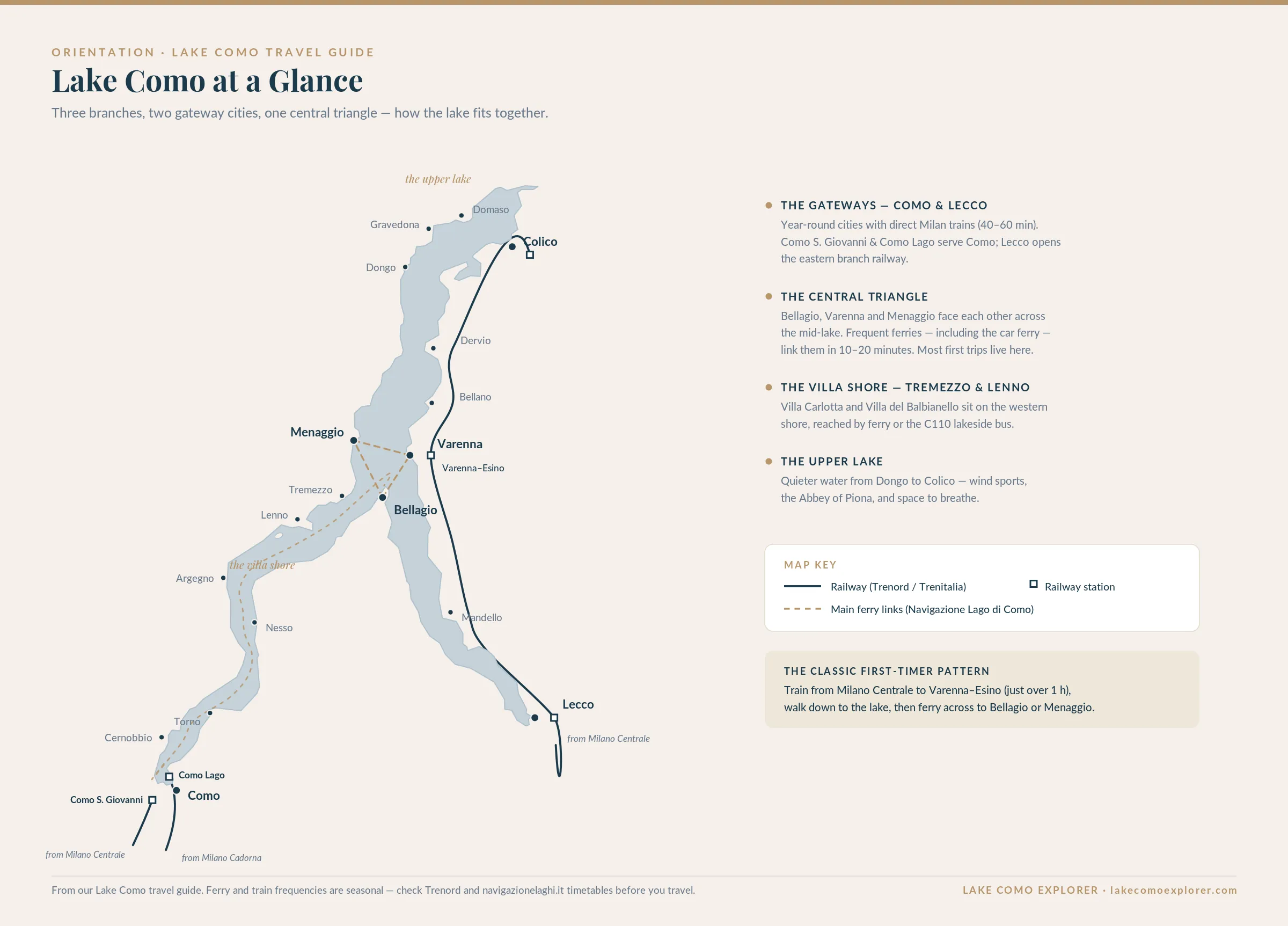
Der Comer See (italienisch: Lago di Como) hat eine charakteristische umgedrehte „Y“-Form. Wer diese Form und die grundlegende Struktur des Sees versteht, trifft bei der Reiseplanung an den Comer See deutlich leichter die richtigen Entscheidungen.
Südwestlicher Arm: endet in der Stadt Como, die in englischen Reiseführern oft als „Como town“ bezeichnet wird.
Südöstlicher Arm: endet in Lecco, einer weiteren lokalen Stadt am Comer See.
Nördlicher Arm: erstreckt sich in Richtung Alpen und zum Gebiet des oberen Comer Sees rund um Colico.

Im Zentrum, wo die drei Seearme zusammentreffen, liegt das berühmte mittlere Seedreieck – mit Bellagio an der Spitze des Vorgebirges sowie Varenna und Menaggio einander gegenüber auf der anderen Seite des Sees. Nahegelegene Orte wie Tremezzo und Lenno reihen sich entlang des Westufers des Comer Sees und beherbergen einige der bedeutendsten Villen.
Auf der Karte wirken die Entfernungen kurz, doch die Straßen entlang des Ufers des Comer Sees sind schmal und der Verkehr kann langsam sein. In der Praxis ist eine Kombination aus Fähren, Regionalzügen und kurzen Busfahrten oft die beste Art, sich rund um den Comer See fortzubewegen.
Planungskürzel: Como und Lecco sind die wichtigsten Zugangspunkte; Bellagio, Varenna und Menaggio bilden das zentrale Dreieck; Tremezzo und Lenno stehen für das villengeprägte Westufer. Wer den See in diese Zonen einteilt, plant seine Reise deutlich einfacher.
3. Choose Where to Base Yourself
Die meisten Reisen funktionieren am besten mit einem festen Standort und Tagesausflügen zum Rest des Sees. Hier ein kurzer, ehrlicher Überblick über die Orte, die die meisten Erstbesucher in Betracht ziehen – zu jedem gibt es einen eigenen ausführlichen Ratgeber.
Como ist die große Torstadt zum See – mit gotischem Dom, der Standseilbahn nach Brunate, Villa Olmo und einer langen Seidenweber-Tradition. Der einfachste Standort, wenn Sie mit dem Zug anreisen und neben dem See auch eine richtige Stadt um sich haben möchten.
Bellagio liegt genau dort, wo sich der See in seine beiden südlichen Arme teilt; seine treppenreichen Gassen, Villengärten und der Hafen haben dem Ort den Beinamen „Perle des Sees" eingebracht. Der romantischste Standort – und in der Hochsaison auch der belebteste.
Varenna, am Ostufer hat seinen Charakter als Fischerdorf bewahrt und bietet eine ruhigere Uferpromenade als das direkt gegenüberliegende Bellagio. Eine gute Wahl für die zentrale Lage am See ohne die Menschenmassen.
Menaggio liegt in der Seemitte am Westufer, gegenüber von Bellagio und Varenna, mit einer Uferpromenade, Burgruinen und Schluchtwanderungen in der Nähe. Ein praktischer, unkomplizierter Standort mit guten Fähranbindungen in alle Richtungen.
Tremezzo, weiter oben am Westufer gegenüber Bellagio, ist geprägt von den Gärten der Villa Carlotta und dem uferentlang führenden Greenway-Weg. Die naheliegende Wahl, wenn Villen und Gärten der Hauptgrund für Ihre Reise sind.
Lenno ist die ruhige Bucht neben der Villa del Balbianello, mit eigenem kleinen Strand und dem hindurchführenden Greenway. Ideal für Reisende, die nur einen kurzen Spaziergang von Balbianello entfernt wohnen möchten, ohne in einem belebteren Ort zu übernachten.
Lecco, am südöstlichen Arm ist die literarische Stadt des Sees – Heimat von Alessandro Manzoni, mit einer mittelalterlichen Brücke und einer eindrucksvollen Bergkulisse. Insgesamt ruhiger und preiswerter als die Orte in der Seemitte.
Einen vollständigen Vergleich und Hilfe bei der Entscheidung finden Sie in unserem Ratgeber zu den besten Unterkunftsorten am Comer See.
4. Choose How to Move
Sobald der Standort feststeht, geht es als Nächstes darum, wie Sie zum Comer See gelangen und sich dort fortbewegen. Kurz gesagt: Der Zug ab Mailand erreicht Como oder Varenna direkt; Fähren sind vor Ort das wichtigste Verkehrsmittel zwischen den Seeorten; und ein Auto lohnt sich nur, wenn Sie die kleineren Nebenstraßen und Bergdörfer erkunden möchten, da Parkplätze knapp und die Uferstraßen schmal sind.
Die Details, die Sie vor Ort wirklich brauchen – Strecken, Ticketarten und Zeitplanung – finden Sie in unserem Fährenratgeber, unserem Ratgeber zum Autofahren und Parken am Comer See, sowie unserem Guide zur Anreise von Mailand und den Flughäfen zum Comer See.
Fährpläne am Comer See & Tagesplaner
Reale Abfahrtszeiten für jede Haltestelle am See.
5. Die Saison wählen
Der Comer See verändert sich im Jahresverlauf spürbar. Später Frühling und früher Herbst bieten in der Regel das angenehmste Gleichgewicht zwischen Wetter und Besucherzahlen; der Sommer ist am wärmsten und am belebtesten, besonders im August rund um Bellagio; der Winter ist ruhig, manche saisonalen Betriebe schließen, doch die Orte selbst bleiben geöffnet, und die Bergsicht kann dann besonders klar sein. Regen ist in jeder Jahreszeit möglich, daher lohnt sich ein Ausweichplan, statt den Tag komplett auf Aktivitäten im Freien auszurichten.
Eine Übersicht nach Jahreszeiten finden Sie in unserem Ratgeber zur besten Reisezeit für den Comer See. Fällt Ihr Reisetermin auf einen Regentag, bietet unser Guide „ Comer See bei Regen “ einen praktischen Ausweichplan.
6. Das richtige Pensum wählen
Der häufigste Planungsfehler am Comer See ist nicht die Wahl des falschen Ortes, sondern der Versuch, an einem Tag zu viele davon zu sehen. Der See belohnt ein langsameres Tempo: zwei oder drei Orte und eine Villa ergeben einen realistischen, angenehmen Tag; fünf Orte an einem Tag bedeuten meist viel Zeit auf Fähren und Bahnsteigen und sehr wenig Zeit tatsächlich vor Ort. Wenn Ihnen nur ein Tag bleibt, planen Sie ihn rund um das zentrale Dreieck (Bellagio, Varenna, Menaggio), statt zu versuchen, den ganzen See zu erreichen.
7. Mit dem passenden ausführlichen Guide beginnen
Zu jeder der oben genannten Entscheidungen gibt es einen eigenen ausführlichen Guide. Beginnen Sie mit dem, der zu dem passt, was Sie noch planen müssen.