

コモ湖旅行ガイド
This in-depth コモ湖観光ガイド is written for travellers who want clear, practical information to plan a real trip, not just a list of pretty photos. Lake Como (Lago di Como) in northern Italy is famous for its mountains, villas and elegant lakeside towns, but many visitors are unsure how to choose where to stay, how to travel around the lake, or how to organise a day trip from Milan. This guide walks you through those decisions in order, then points you to a dedicated, more detailed guide for each one.
このガイドでは
1. Lake Como in Two Minutes
If you only read one part of this guide, read this table. It matches common traveller situations to a sensible base and way of getting around.
| もしあなたが… | 最適な拠点 | 一番いい行き方 | チップ |
|---|---|---|---|
| 初めての旅行、数日間 | ヴァレンナ または ベッラージオ | フェリー+電車 | いくつかのヴィラと2~3の村を見て、湖全体を急がないでください |
| 車なしで旅行する | コモ または ヴァレンナ | 電車+フェリー | どちらも水辺に駅があり、車なしで最も簡単な拠点です |
| 一日だけ | Central lake (ベッラージオ · ヴァレンナ · メナッジョ) | フェリー | 湖の真ん中の三角形を選び、すべてを見ようとしないこと。 |
| ヴィラ&ガーデン | Central-west (レンノ · トレメッツォ) | フェリー + 短い散歩 | ヴィッラ・デル・バルビネッロを予約してください |
| ラグジュアリーかロマンチックか | ベッラージオ or Cernobbio | プライベートボート/送迎 | ピークシーズンは早めに予約する |
| 低予算 | レッコ, コモ or Argegno | 電車+フェリーパス | ショルダーシーズンは、より静かで、より安価です |
A quick orientation — the sections below go deeper on each choice. Ferry and train frequencies vary by season, so check current timetables before you travel.
2. Understand the Lake
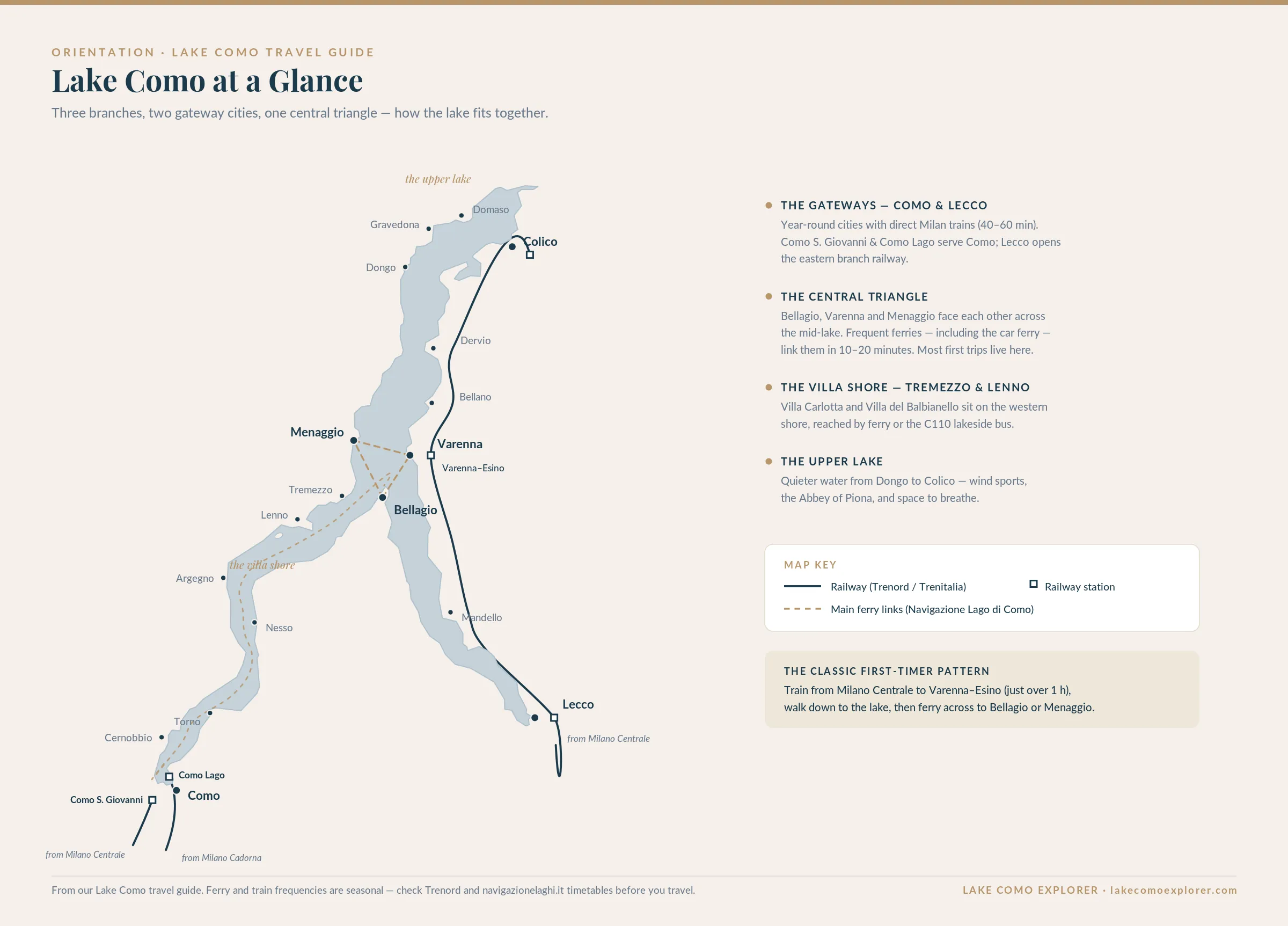
コモ湖(イタリア語:Lago di Como)は、逆さまの「Y」の形をした独特の地形をしています。この形状と湖の基本的な構造を理解することで、コモ湖旅行を計画する際の判断が格段にしやすくなります。
南西の支流:コモ市で終わり、英語の旅行ガイドでは「Como town」と呼ばれることもあります。
南東の支流:レッコで終わり、コモ湖沿いのもう一つのローカルな都市です。
北側の支流:アルプス方面へ伸び、コリコ周辺のコモ湖北部エリアへと続いています。

三つの支流が合流する湖の中心部には、有名なミッドレイク・トライアングルがあります。半島の先端にはベラージオが位置し、ヴァレンナとメナッジョが湖を挟んで向かい合っています。近くのトレメッツォやレンノといった村々はコモ湖の西岸に連なり、特に重要なヴィラが点在しています。
地図上では距離が短く見えますが、コモ湖沿いの道路は狭く、交通が遅くなることがあります。実際には、コモ湖周辺の移動はフェリー、ローカル列車、短距離のバス移動を組み合わせるのが最も効率的な場合が多いです。
計画の近道:コモとレッコは主要な玄関口、ベラージオ・ヴァレンナ・メナッジョは中央の三角地帯、トレメッツォとレンノはヴィラが集まる西岸エリアです。湖をこのようなゾーンで捉えると、旅の計画がずっと簡単になります。
3. Choose Where to Base Yourself
Most trips work best from one base, with day trips to the rest of the lake. Here is a short, honest read on the main towns most first-time visitors consider — each has its own full guide if you want the detail.
コモ is the lake’s grand gateway city — a Gothic Duomo, the Brunate funicular, Villa Olmo and a long silk-weaving history. It’s the easiest base if you’re arriving by train and want a real city around you as well as the lake.
ベッラージオ sits exactly where the lake divides into its two southern arms, and its stepped alleys, villa gardens and harbour have earned it the nickname “Pearl of the Lake.” It’s the most romantic base, and also the busiest in peak season.
ヴァレンナ, on the eastern shore, keeps its fishing-village character with a quieter waterfront than Bellagio directly across the water. A good pick if you want the central-lake location without the crowds.
メナッジョ sits mid-lake on the western shore, facing Bellagio and Varenna, with a lakefront promenade, castle ruins and gorge walks nearby. A practical, less formal base with good ferry connections in every direction.
トレメッツォ, further up the western shore facing Bellagio, is built around Villa Carlotta’s gardens and the lakefront Greenway path. The natural choice if villas and gardens are the main reason for your trip.
レンノ is the quiet bay next to Villa del Balbianello, with its own small beach and the Greenway running through it. Best for travellers who want to be a short walk from Balbianello without staying in a busier town.
レッコ, on the south-eastern branch, is the lake’s literary city — home to Alessandro Manzoni, with a medieval bridge and a dramatic mountain backdrop. Generally calmer and better value than the central-lake towns.
For a full side-by-side comparison and help narrowing it down, see our guide to where to stay in Lake Como.
4. Choose How to Move
Once you know your base, the next decision is how you’ll get to Lake Como and move around it. In short: the train from Milan reaches Como or Varenna directly; ferries are the main way to move between lakeside towns once you’re here; and a car is only worth it if you plan to explore the smaller back roads and hilltop villages, since parking is limited and roads along the shore are narrow.
For the details you’ll actually need on the day — routes, ticket types and timing — see our フェリーガイド, our guide to driving and parking around Lake Como, and our guide to getting from Milan and the airports to Lake Como.
コモ湖フェリー時刻表&デイツアーガイド
湖の全ての停留所の実際の出発時刻.
5. Choose the Season
Lake Como changes noticeably through the year. Late spring and early autumn generally offer the most comfortable balance of weather and crowds; summer is warmest and busiest, especially around Bellagio in August; winter is quiet, with some seasonal businesses closed, but the towns themselves stay open and the mountain views can be at their clearest. Rain is possible in any season, so it’s worth having a backup plan rather than building a day entirely around being outdoors.
For a season-by-season breakdown, see our guide to the コモ湖への訪問に最適な時期. If your dates land on a wet day, our guide to Lake Como when it rains has a practical backup plan.
6. Choose How Much to Include
The most common planning mistake on Lake Como isn’t picking the wrong town — it’s trying to see too many of them in one day. The lake rewards a slower pace: two or three towns and one villa is a realistic, enjoyable day; five towns in one day usually means a lot of time on ferries and train platforms and very little time actually in any of them. If you only have one day, build it around the central triangle (Bellagio, Varenna, Menaggio) rather than trying to reach the whole lake.
7. Start with the Right Detailed Guide
Each decision above has its own in-depth guide. Start with whichever one matches what you still need to plan.