
コモ湖発の日帰り旅行:北イタリアで最高の日帰り旅行を見つける方法
すでにコモ湖を拠点に滞在し、ホテルを変えずに湖岸の外まで探索したい方々のためのガイドです。湖からは、主要な文化都市や他の象徴的な湖、さらにはスイスのアルプス鉄道ルートにも日帰りで行き、毎晩同じ宿泊先に戻ることができます。重要なのは、公共交通機関の時間に合い、皆さまの旅行スタイル—個人旅行、ガイド付き、またはそのバランス—に合った現実的な行程を選ぶことです。
このガイドでは
これはコモ湖周辺の村を紹介する一覧ではありません。コモ湖を起点とした広域および国際的な日帰り旅行に特化し、ミラノ、ベルガモ、ルガーノ、マッジョーレ湖、ティラーノとヴァルテッリーナ、そしてサン・モリッツへ向かうベルニナ線などを取り上げています。実用的な移動情報、提案ルート、率直なメリットと注意点、明確な判断基準を掲載し、慌ただしさのない計画的な日帰り旅行を実現します。
湖畔で一日を過ごしましょう
実際のフェリー接続を利用して、1日でいくつかの村を巡りましょう。.
概要:最適な日帰り旅行の選び方
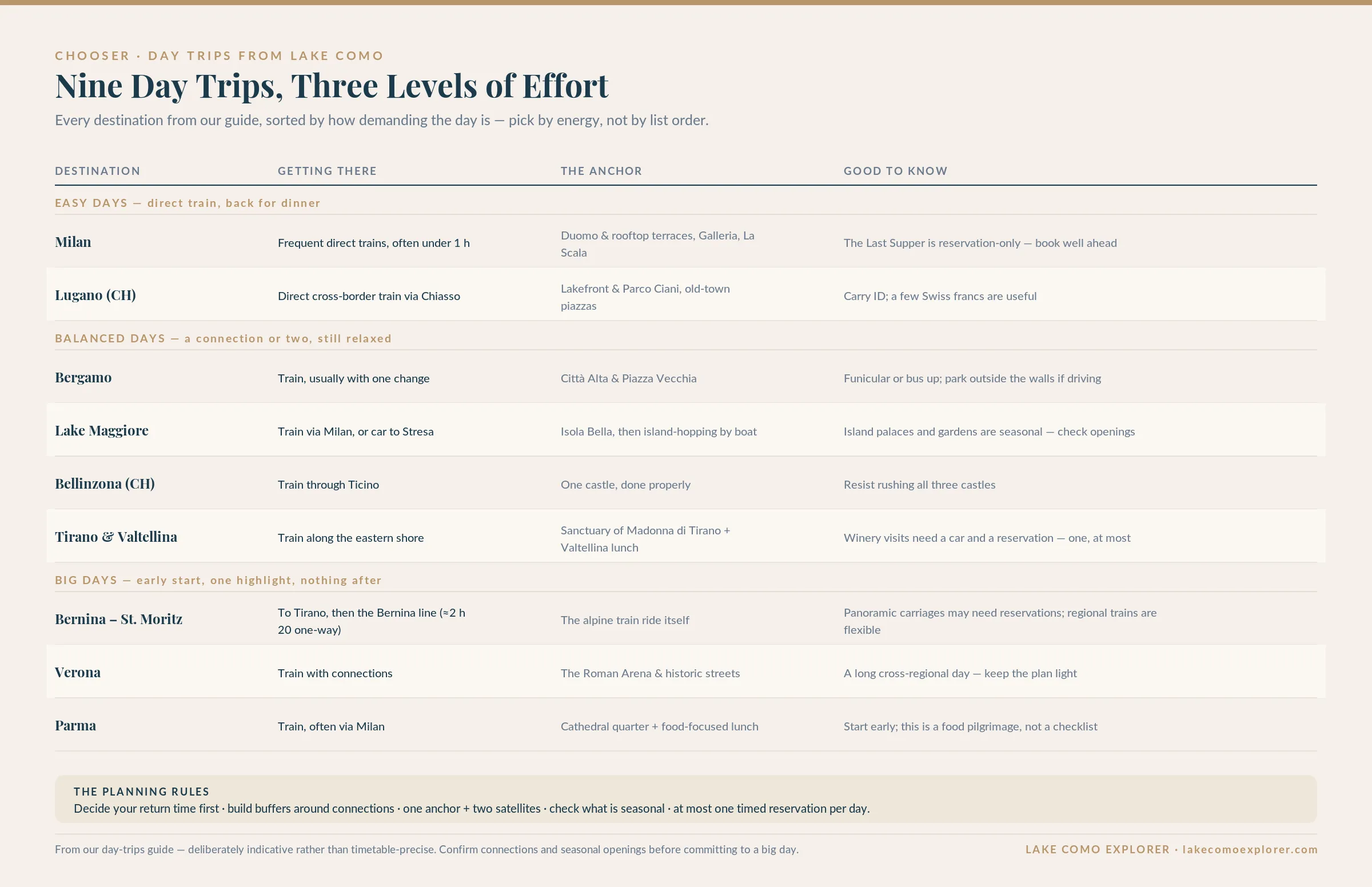
コモ湖からの最適な日帰り旅行は、三つの要素によって決まります。湖畔のどこに滞在しているかという拠点、長時間移動への許容度、そして最も求める体験——都市文化、アルプスの景色、別の湖、またはスイスらしい雰囲気の変化です。
次のシンプルな判断フレームを使ってください:
- Easy day (low logistics, high comfort): choose a direct train destination such as Milan or Lugano. You can leave after breakfast and still be back for dinner without stress.
- Balanced day (more variety, still realistic): choose Bergamo or Lake Maggiore. Expect connections and slightly longer transfers, but the experience feels meaningfully different from Lake Como.
- Big day (long, unforgettable, very early start): choose the Bernina route to St. Moritz. This is a full commitment day with early trains and careful planning, but it delivers a once-in-a-lifetime level of scenery.
滞在拠点は重要です。湖の南端付近に滞在している場合、主要な鉄道接続や国境を越える列車へのアクセスが最もスムーズです。湖の中ほどや東岸に滞在している場合でも、これらの旅程はすべて可能ですが、主要な鉄道ハブ(通常はより大きな駅)に到達するための追加時間を見込む必要があります。実際には、より早い出発と時間の余裕を組み込むことが求められます。
計画の基本:時間配分、チケット、現実的なペース
日帰り旅行の成否は時間配分にかかっています。北イタリアやスイス南部は十分に日帰り可能ですが、いくつかの実践的なルールを受け入れる必要があります。
ルール1:まず「帰着時間」を決める
何を見るかを決める前に、コモ湖へ何時に戻りたいかを先に決めましょう。多くの旅行者は、特に都市観光の後における落ち着いた帰路の価値を過小評価しがちです。湖畔で夕食を楽しみたい場合は、午後遅めから夕方早めの帰着を計画してください。遅めの夕食を好む場合は、さらに遅く戻ることも可能ですが、列車の時刻表が対応している場合に限られます。
ルール2:乗り換えには余裕時間を設ける
乗り換えが必要になると、日帰り旅行は余裕が少なくなります。駅構内での移動、ホーム変更、小さな遅延に備えて余裕時間を確保しましょう。シンプルな一日であれば、直通列車または乗り換えが最小限の目的地を優先してください。複雑な一日(ベルニナ線)の場合は、余裕時間を必須条件として扱うべきです。
ルール3:1つの中心ポイント+2つのサテライトを使いましょう
明確な構成は慌ただしい行程を防ぎます:
- Anchor: the main highlight (Duomo in Milan, Città Alta in Bergamo, Parco Ciani in Lugano, Isola Bella on Lake Maggiore, the Bernina train itself).
- Satellite 1: a second key stop that complements the anchor (a museum, viewpoint, neighbourhood, or garden).
- Satellite 2: a flexible, optional stop you can skip if timing slips (shopping street, café area, short boat ride, or extra museum).
ルール4:季節要因を確認する
体験の中には強い季節性を持つものがあります。マッジョーレ湖の島々にある宮殿や庭園は、通常、季節限定の開園期間があります。山の景色は一年を通して楽しめますが、冬は日照時間が短く、天候が景観ルートに影響することがあります。繁忙期には人混みや待ち時間が増え、「見えない時間コスト」が高くなります。
ルール5:チケット戦略はシンプルに
ほとんどの日帰り旅行では、列車のチケットはオンラインまたは駅で購入できます。時間指定のある体験(ミラノの「最後の晩餐」、ベルニナ線のパノラマ車両、一部の美術館入場)は、事前予約がおすすめです。出発時間を固定したくない場合は、柔軟なチケットを選び、時間指定の観光を詰め込みすぎないようにしましょう。
ミラノ:文化、名所、ショッピング、アペリティーヴォ
ミラノはコモ湖から行ける大都市の日帰り旅行として最も手軽で、どの季節でも安定して楽しめる行き先です。列車移動は短く、見どころがコンパクトに集まっており、建築、アート、デザイン、ショッピング、あるいは雰囲気重視など、皆さまの優先事項に合わせて一日を組み立てられます。
アクセス方法
コモ湖周辺からミラノへは、通常一日を通して列車が頻繁に運行しています。所要時間は路線や列車の種類によって異なりますが、速い直通列車であれば1時間以内で到着することが多いです。到着後はミラノの地下鉄が市内移動を容易にし、地区ごとに計画すれば主要な見どころの多くは徒歩で回れます。
おすすめのタイプ
- 湖とは異なる「大都市のコントラスト」を求める初訪問の方々
- 建築と名所を巡りたい方(ドゥオーモ、ガレリア)
- 美術館・ギャラリーとデザイン文化
- ショッピングとアペリティーボ
現実的な1日行程(バランス重視、慌てない)
Morning (Anchor): Start at the Duomo area. Visit the cathedral and, if weather is clear, go up to the rooftop terraces. The terraces are one of the most memorable Milan experiences because they are both architectural and panoramic.
Midday (Satellite 1): Walk through the Galleria Vittorio Emanuele II and continue toward La Scala. If you are interested, add a museum visit; if not, use this time for a relaxed lunch and street-level exploration.
午後(いずれかを選択):
- Art option: Santa Maria delle Grazie for “The Last Supper” (only if you have a reservation) plus a calm stroll nearby.
- History option: Castello Sforzesco and Parco Sempione for a mix of city history and green space.
- デザインの選択肢: A design district walk (choose one neighbourhood rather than attempting several).
Evening (Satellite 2): Navigli for aperitivo and canal atmosphere. Then return to the station for your train back to Lake Como.
ミラノ観光の実用的なヒント
- すべての有名スポットを「制覇」しようとしないでください。ミラノはチェックリスト型の観光より、厳選されたペース配分を評価します。
- 時間指定の予約は最大1つに留めましょう(例:「最後の晩餐」)。時間枠が多すぎるとストレスになります。
- 夕方のアペリティーヴォの前に帰りのルートを決めておき、時刻表を直前に調べることがないようにしましょう。
ベルガモ:中世の上城とパノラマの眺望
ベルガモは、大都市の喧騒を避けつつ、雰囲気、歴史的な重なり、そしてパノラマの眺望を求める方にとって、非常に満足度の高い日帰り先です。上城区(チッタ・アルタ)は、石畳の小道や優雅な広場、ヴェネツィア城壁沿いの展望スポットを備え、近代都市の上に広がる独立した歴史世界のように感じられます。
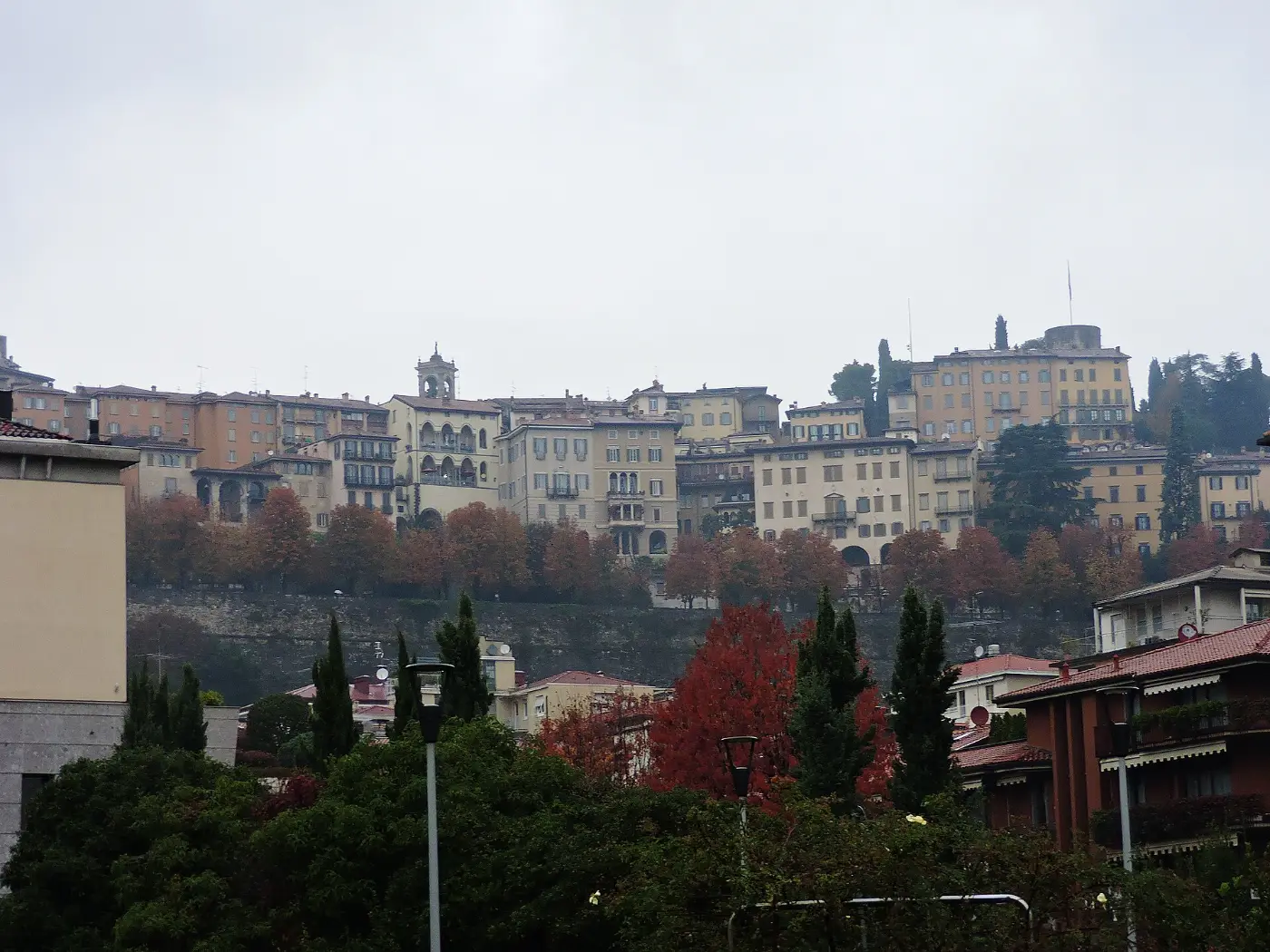
アクセス方法
ベルガモへは列車(多くの場合、少なくとも1回の乗り換えあり)または車でアクセスできます。到着後は、チッタ・アルタへ向かい、そこで大半の時間を過ごすのが最もおすすめです。下町も心地よいですが、象徴的な体験は上城区にあります。
おすすめのタイプ
- 田舎の奥地まで行かずに、歴史ある丘の町の雰囲気を味わいたい方々
- パノラマビューと写真映えする街並み
- ミラノより落ち着いた代替先
現実的な1日行程(バランス重視、慌てない)
Morning (Anchor): Go straight to Città Alta. Start with the main square area (Piazza Vecchia) and the surrounding historic buildings. The atmosphere here is the highlight—move slowly and let the city reveal itself.
Midday (Satellite 1): Visit the Basilica di Santa Maria Maggiore and the Colleoni Chapel. Then enjoy a traditional lunch in a classic osteria.
Afternoon (Satellite 2): Walk along the Venetian walls and viewpoints. If you have time and energy, add a bell tower climb or a small museum, but keep it optional. Return to the lake before the evening becomes rushed.
ベルガモ観光の実用的なヒント
- チッタ・アルタに集中しましょう。「上下の街を同じ比重で回ろう」とすると、一日の満足度が下がります。
- 歩きやすい靴を履きましょう。石畳や坂道も体験の一部です。
- 車で訪れる場合は、歴史地区の外に駐車し、公共のアクセス手段(ケーブルカーやバス)を利用しましょう。
ルガーノ:スイスの湖畔エレガンス、公園と展望スポット
ルガーノは、コモ湖から行ける最も手軽な国際日帰り旅行先です。列車移動は短く、言語や食文化は親しみやすい一方で、街の運営や雰囲気ははっきりとスイスらしくなります。整った湖畔都市として、優れた公園や展望スポット、洗練されたペースを楽しめます。
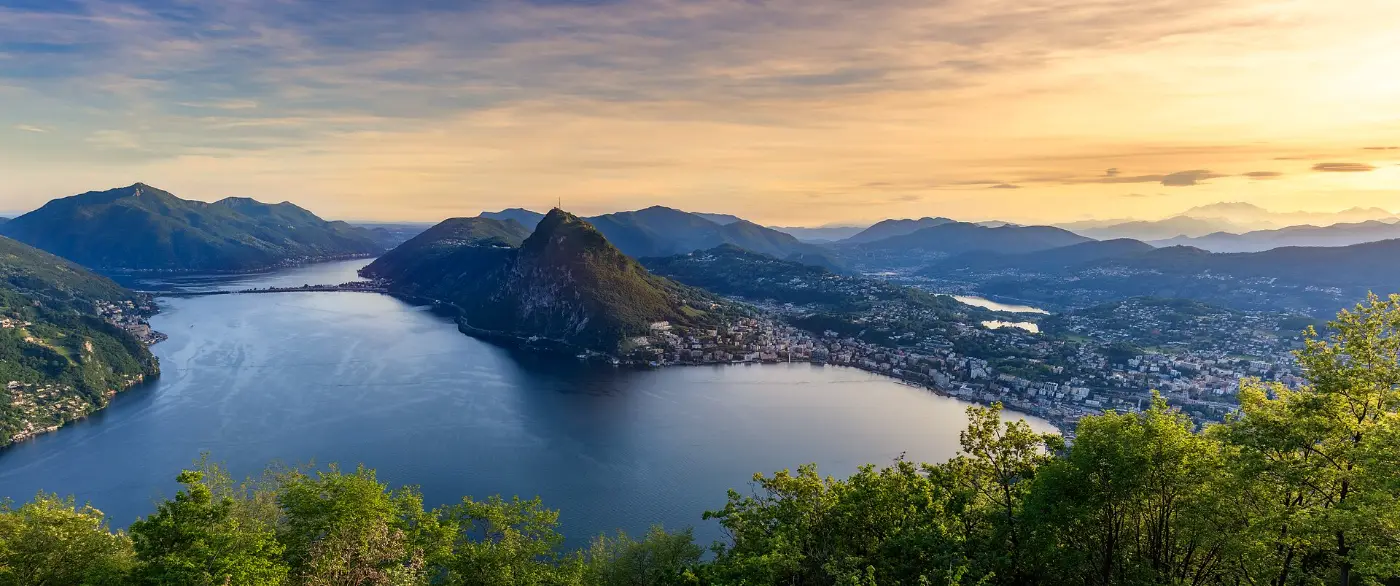
アクセス方法
コモ湖周辺からルガーノへは、通常キアッソ経由の直通国際列車でアクセスできます。所要時間は1時間未満であることが多く、「朝食後に出発して夕食までに戻る」理想的な日帰り旅行が可能です。定期的な検査がなくても、国境を越えるための有効な身分証明書を必ず携帯してください。
おすすめのタイプ
- 長距離移動なしで「外国に来た感覚」を味わいたい方々
- 湖畔のプロムナード、公園、そしてゆったりとした街歩き
- ケーブルカーや短いリフトで行ける展望スポット
現実的な1日行程(バランス重視、慌てない)
Morning (Anchor): Walk the lakefront and Parco Ciani. This park is one of Lugano’s most enjoyable spaces—open lawns, lakeside paths, and framed views of mountains across the water.
Midday (Satellite 1): Explore the old town and central piazzas. Choose a simple lunch—either a classic café meal or a local spot that mixes Italian flavour with Swiss precision.
Afternoon (Satellite 2): Add one viewpoint experience if the weather is clear. Lugano’s surrounding hills can deliver wide panoramas that feel very “alpine” without requiring a major hike. Keep this optional: if clouds roll in, stay in the city and enjoy the atmosphere instead.
ルガーノ観光の実用的なヒント
- カードは持参しつつ、小額の支払い用にスイスフランを少し用意しておくと便利です。
- 詰め込みすぎないでください。ルガーノは、ゆっくりと動き、湖畔のリズムを楽しむことで本当の魅力が伝わります。
- 天気予報が良くない場合は、展望スポットを美術館やカフェ、そして旧市街をゆっくり歩く時間に置き換えましょう。
ベリンツォーナ:城とコンパクトなスイス旧市街
スイスらしさに惹かれつつ、ルガーノよりも歴史的でコンパクトな場所を求めているなら、ベリンツォーナは非常に優れた選択肢です。最大の見どころは、谷の景観を背景にそびえる三つの城です。街自体は小さく徒歩で回りやすく、城、展望スポット、整ったスイス・イタリア風の雰囲気という、明確なテーマで一日を過ごしたい方に最適です。
アクセス方法
ベリンツォーナへはティチーノ州を経由して列車でアクセスできます。直行の鉄道日帰り旅行が最適です。到着後は城と旧市街に集中し、余計な立ち寄りを増やさずに戻りましょう。
おすすめのタイプ
- 歴史愛好家と展望スポットを求める方々
- 明確なテーマを持つ、穏やかなスイスの一日を求める旅行者
- ショッピングや美術館よりも、短いハイキングや城の散策路
おすすめの旅程
Morning (Anchor): Choose one major castle as your anchor and explore it thoroughly rather than rushing three. Read the signage, walk the walls, and enjoy the elevated views.
Midday (Satellite 1): Lunch in the old town. Keep it simple and local.
Afternoon (Satellite 2): If energy and time allow, add a second castle or a viewpoint walk. Then return toward the lake with buffer time for trains.
マッジョーレ湖とボッロメーオ諸島:庭園、宮殿、島巡り
マッジョーレ湖は、まったく異なる個性を持つ湖です。より広い湖岸、優雅なリゾートタウン、そして宮殿と庭園で知られるボッロメオ諸島が特徴です。整えられた景観美や歴史的な室内空間を好む旅行者にとって、最適な日帰り先の一つです。また、コモ湖とは明確に異なり、光の質、スケール感、そして流れる時間のリズムも違います。
How to get there: The classic strategy is to reach Stresa and then use boats to island-hop. Getting to Stresa is possible by train (often via Milan) or by car. Once you arrive, the experience becomes very straightforward: buy boat tickets and move between islands at your chosen pace.
こんな方におすすめ: gardens, architecture, and romantic lake scenery; a “second lake” day that feels curated and elegant; travellers who enjoy slow walking, photo stops, and scenic boat rides.
Realistic full-day itinerary:
Morning (Anchor): Take a boat to Isola Bella and focus on the palace and gardens. This is the headline experience—give it real time and do not rush.
Midday (Satellite 1): Head to Isola dei Pescatori for lunch and a gentle walk through the tiny village lanes. This is a calmer, human-scale contrast to the formal grandeur of Isola Bella.
Afternoon (Satellite 2): If energy and opening hours allow, add Isola Madre for botanical gardens, then return to Stresa and begin your trip back to Lake Como.
Practical tips for Lake Maggiore: Check seasonal openings for the palaces and gardens before you commit to the day. In peak season, arrive earlier to avoid queues for boats and ticket lines. Do not attempt to add extra towns “because you are already there”—lake days become stressful when you overextend.
ティラーノとヴァルテッリーナ:アルプスの味覚と渓谷風景
よりローカルで、「観光向けに磨かれすぎていない」体験を求めるなら、ヴァルテッリーナ渓谷は非常におすすめです。ここはロンバルディア州にあるアルプス地域で、山岳風景、段々畑のブドウ畑、そして滋味豊かな食文化で知られています。ティラーノは、歴史ある町であると同時にベルニナ線への玄関口でもあるため、定番の拠点です。
How to get there: Tirano can be reached by train along the eastern side of the region or by car through the valley roads. It is a longer day than Milan or Lugano, but much less logistically complex than doing the full Bernina route to St. Moritz. If you want the “alpine valley” feeling without a full Switzerland commitment, Tirano and Valtellina deliver.
こんな方におすすめ: travellers who value authentic regional food and slower pacing; mountain landscapes and valley scenery; wine culture and rustic local identity.
Realistic full-day itinerary:
Morning (Anchor): Arrive in Tirano and explore the historic centre. Visit the Madonna di Tirano sanctuary and enjoy the architectural contrast to the lake towns.
Midday (Satellite 1): Lunch with a Valtellina signature dish. This region is best experienced through food as much as scenery.
Afternoon (Satellite 2): Add one structured experience: a short vineyard stop (if you have a car and a reservation), a scenic walk, or a relaxed café hour. Then return toward Lake Como with buffer time.
Practical tips for Valtellina: If you plan a wine tasting, reserve in advance and keep it to one winery to avoid timing stress. Mountain weather changes quickly—dress in layers even when the lake is warm. This is not the day for a tight schedule: let the valley feel slower.
ベルニナ線で行くサン・モリッツ:象徴的なアルプス列車
ベルニナ線は、コモ湖から行ける日帰り旅行の中で最もドラマチックなルートです。同時に、所要時間を甘く見て失敗しやすい行程でもあります。計画をしっかり立てれば忘れられない体験となり、高山の景色へと登っていく本格的なアルプス鉄道の旅を、技術的な登山や数日間の行程なしで楽しめます。
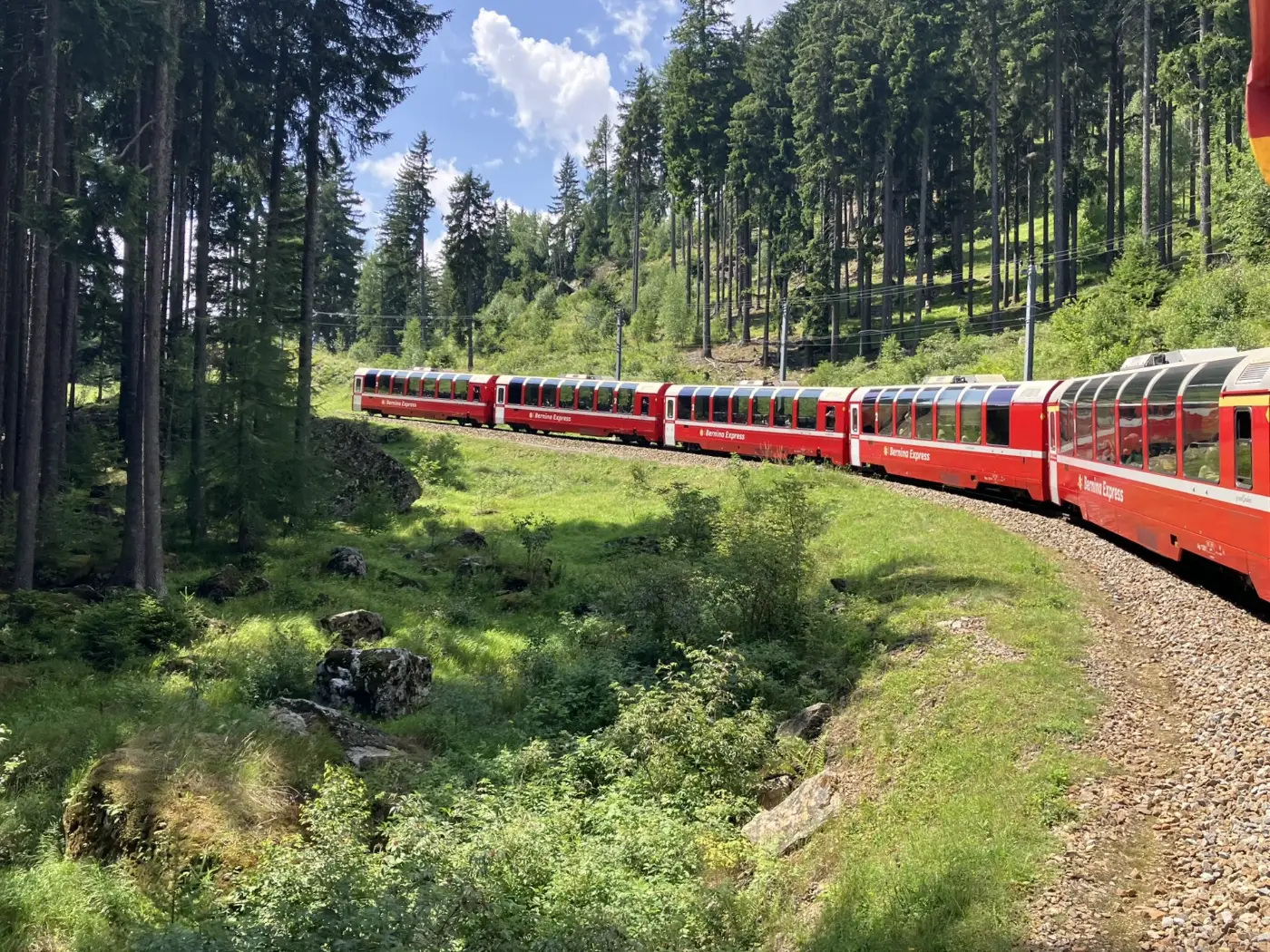
基本的な考え方はシンプルです。ティラーノに到着し、ベルニナ線でサン・モリッツまで向かい、短時間滞在した後、同じルートで戻ります。ただし実行には規律が必要です。早朝出発、十分な時間的余裕、そして列車の旅そのものが主役であり、サン・モリッツでの滞在時間は主目的ではないという現実的な認識が欠かせません。
How to get there: Step one is reaching Tirano. Step two is boarding the Bernina line. The one-way rail journey on the Bernina line is typically around 2 hours and 20 minutes. If you choose panoramic carriages on a dedicated tourist service, you may need reservations; if you choose regular regional trains, you usually get more flexibility and more frequent departures. Both follow the same spectacular route.
こんな方におすすめ: travellers who want a once-in-a-lifetime scenic experience; alpine views, glaciers, viaducts, and dramatic landscapes; people happy to prioritise the journey over a long stop at the destination.
Realistic full-day itinerary (the version that actually works):
Early morning: Leave Lake Como early and arrive in Tirano with buffer time. Do not plan a long breakfast in Tirano. This is a logistics day.
Late morning to early afternoon (Anchor): Ride the Bernina line to St. Moritz. Sit on the best-view side if you can, but do not obsess: the route is scenic from both sides, and there are multiple visual peaks.
Afternoon (Satellite 1): In St. Moritz, do one simple experience: a lakefront walk and a coffee, or a short town stroll. Keep it calm. Your return still matters.
Late afternoon to evening (Satellite 2): Take the return train to Tirano and continue back to Lake Como. This is where buffer time saves you from stress.
Practical tips for the Bernina day: This is the day to avoid stacking extra stops—the train ride is the headline. Weather changes the experience: clear days deliver maximum drama; cloudy days can still be beautiful but less panoramic. If you prefer less risk, consider a guided tour that manages transfers and timing; if you prefer freedom, choose regional trains for flexibility.
ヴェローナ:ローマ時代の円形闘技場と優雅な歴史的街並み
ヴェローナは、やや移動時間の長い地域横断の日帰り旅行ですが、ローマ時代の遺産と優雅な街並みを持つ洗練された歴史都市を求める旅行者には十分に報われます。ローマ円形闘技場は、イタリアでも最も象徴的な遺構の一つで、今なおヴェローナを代表する存在です。名所を超えて、街の本当の魅力はその雰囲気にあります。石橋、川の眺め、そして歩いて巡るために設計された旧市街です。
How to get there: Verona is typically reached by train with connections or by car along major routes. It works best for travellers who are comfortable with a long day and who want a single destination that is “all city,” with no additional complexity once you arrive.
Suggested itinerary:
Morning (Anchor): Arena area and the core historic streets around it.
Midday (Satellite 1): River walk and one major church or viewpoint.
Afternoon (Satellite 2): A flexible neighbourhood stroll and relaxed café time, then return to Lake Como.
パルマ:食文化、建築、そしてスローな街の魅力
パルマは、刺激の強い観光チェックリストではなく、味わいと雰囲気を楽しむ、穏やかでゆったりとした都市体験を求める旅行者に適した日帰り先です。国際的には食文化で知られていますが、洗練された歴史地区、優雅な広場、そしてミラノや湖畔とは明確に異なる落ち着いたリズムも魅力です。
How to get there: Parma is typically reached by train (often via Milan) or by car. Because it is farther than Milan or Bergamo, it works best if you start early and keep your plan simple once you arrive: one historic core walk, one food-focused experience, one relaxed break, and then return.
Suggested itinerary:
Morning (Anchor): Historic centre walk with the cathedral area as a focal point.
Midday (Satellite 1): A food-focused lunch and a short gourmet shopping stop.
Afternoon (Satellite 2): A park stroll or a museum, then begin the return.
公共交通機関か車か:実際に最適なのはどちらか
どちらの方法もコモ湖から実行可能ですが、適している旅行スタイルは異なります。
When public transport is best: City days such as Milan and Lugano are ideal by train—you avoid traffic, parking, and restricted zones. Trains also reduce stress for high-demand destinations where parking is difficult or expensive. For solo travellers or couples, the cost-benefit of a car often does not pay off for small groups.
When a car is best: A car can reduce connection complexity for a Lake Maggiore day depending on your base and route. It is also useful for Valtellina explorations if you want vineyards or small valley stops, and it suits travellers who prefer custom pacing: sunrise starts, flexible photo stops, and independence from timetables.
Reality check: the hidden costs of driving
Driving in Northern Italy can be efficient, but it also introduces friction: tolls, parking searches, city access restrictions, and the mental load of navigation. For many travellers, the train is simply more pleasant. A good strategy is mixed mode: do city and Switzerland days by train, and reserve driving for “countryside flexibility” days.
ガイド付きツアーかDIYか:ツアーが価値を持つ場面
バランスの取れた考え方が最も効果的なことが多いです。シンプルな日は個人で行動し、リスクを本当に減らせるような複雑な日はガイド付きツアーを検討しましょう。
DIY works best when: the destination is direct by train (Milan, Lugano); you want freedom to change plans based on weather or mood; you prefer slow pacing, long lunches, and flexible return times.
Guided tours are worth it when: the day includes multiple transfers and tight timing (the Bernina day from certain bases); you want tickets and logistics handled end-to-end with minimal thinking; you value curated commentary and a “best-of” route without research.
よくある計画ミスの一つは、列車で簡単に行ける目的地にガイド付きツアーを予約してしまうことです。ガイド付きツアーは、単なる枠組みではなく、本当の価値を提供してくれる日に取っておきましょう。
避けるべきよくある間違い
Overstacking highlights: The fastest way to ruin a day trip is adding “just one more stop.” Use one anchor, two satellites, and protect your return.
Ignoring seasonality: Gardens, islands, and some attractions have seasonal opening periods. Always verify before committing.
No buffer time: Connections are where stress happens. Buffer time is not wasted time—it is the difference between calm travel and panic.
Wrong day for the wrong weather: Save panoramic trains and viewpoint days for clear forecasts when possible. Use cloudy days for cities and museums.
Late starts for big days: The Bernina route is not an afternoon idea. If you cannot start early, choose a different day trip.
コモ湖からの日帰り旅行に関するよくある質問
How many day trips should I plan during a short Lake Como stay?
If you have three to five nights on Lake Como, plan two day trips beyond the lake and keep at least one full day for a slower lakeside rhythm. A strong mix is one city day (Milan or Bergamo) plus one “special experience” day (Lugano or Lake Maggiore). If you want the Bernina route, make it the single “big day” and do not add another heavy day immediately after.
Which day trip is the easiest if I want zero stress?
Lugano is usually the simplest international day: short train ride, compact city, and a relaxed pace. Milan is also easy logistically, but it can feel intense due to crowds and the scale of the city. If you want calm, choose Lugano.
Is the Bernina route to St. Moritz realistic as a day trip?
Yes, but it is a long day and it must be planned properly. The train journey is the main event, and your time in St. Moritz will be limited. If you start late or try to add extra stops, the day becomes stressful. If you want an unforgettable scenic experience and you are comfortable with an early start, it is worth it.
Should I rent a car for these day trips?
Not necessarily. Trains are excellent for city days and for Switzerland. A car is most useful when you want countryside flexibility (for example, deeper Valtellina stops or certain Lake Maggiore routing depending on your base). If you dislike driving, public transport will cover most classic day trips well.
Do I need a passport to go to Switzerland for the day?
You should carry valid identification for international travel. While there may not be routine border checks, you can still be asked for ID, especially on cross-border trains. Carry your passport or an appropriate national ID document.
What are the best months for day trips from Lake Como?
Late spring and early autumn are ideal for day trips: mild temperatures, comfortable walking conditions, and strong daylight. Summer works well but adds crowds and queues. Winter is calmer and atmospheric for cities, while alpine routes can be spectacular in snow—just remember that daylight is shorter and weather is more variable.
How do I choose between Milan and Bergamo?
Choose Milan if you want major landmarks, museums, shopping, and high-energy city life. Choose Bergamo if you want medieval atmosphere, panoramic viewpoints, and a calmer historic core that feels curated and walkable without being overwhelming.
How do I avoid the “rushed day trip” feeling?
Pick one anchor experience, add two optional satellites, and decide your return time before you start the day. Avoid stacking timed reservations, build buffers for transfers, and keep at least one “slow” moment (a long lunch, a park walk, a lakefront café). Those pauses are what make the day feel elegant rather than exhausting.