

Lake Como Travel Guide
This in-depth Lake Como travel guide is written for travellers who want clear, practical information to plan a real trip, not just a list of pretty photos. Lake Como (Lago di Como) in northern Italy is famous for its mountains, villas and elegant lakeside towns, but many visitors are unsure how to choose where to stay, how to travel around the lake, or how to organise a day trip from Milan. This guide walks you through those decisions in order, then points you to a dedicated, more detailed guide for each one.
In this guide
1. Lake Como in Two Minutes
If you only read one part of this guide, read this table. It matches common traveller situations to a sensible base and way of getting around.
| If you are… | Best base | Best way around | Tip |
|---|---|---|---|
| First trip, a few days | Varenna or Bellagio | Ferry + train | See a couple of villas and 2–3 villages; don’t rush the whole lake |
| Travelling without a car | Como or Varenna | Train + ferry | Both have stations at the water; the easiest car-free bases |
| Only one day | Central lake (Bellagio · Varenna · Menaggio) | Ferry | Pick the mid-lake triangle; resist trying to see everything |
| Villas & gardens | Central-west (Lenno · Tremezzo) | Ferry + short walks | Book Villa del Balbianello ahead |
| Luxury or romance | Bellagio or Cernobbio | Private boat / transfers | Book early in peak season |
| Lower budget | Lecco, Como or Argegno | Train + ferry passes | Shoulder season is calmer and cheaper |
A quick orientation — the sections below go deeper on each choice. Ferry and train frequencies vary by season, so check current timetables before you travel.
2. Understand the Lake
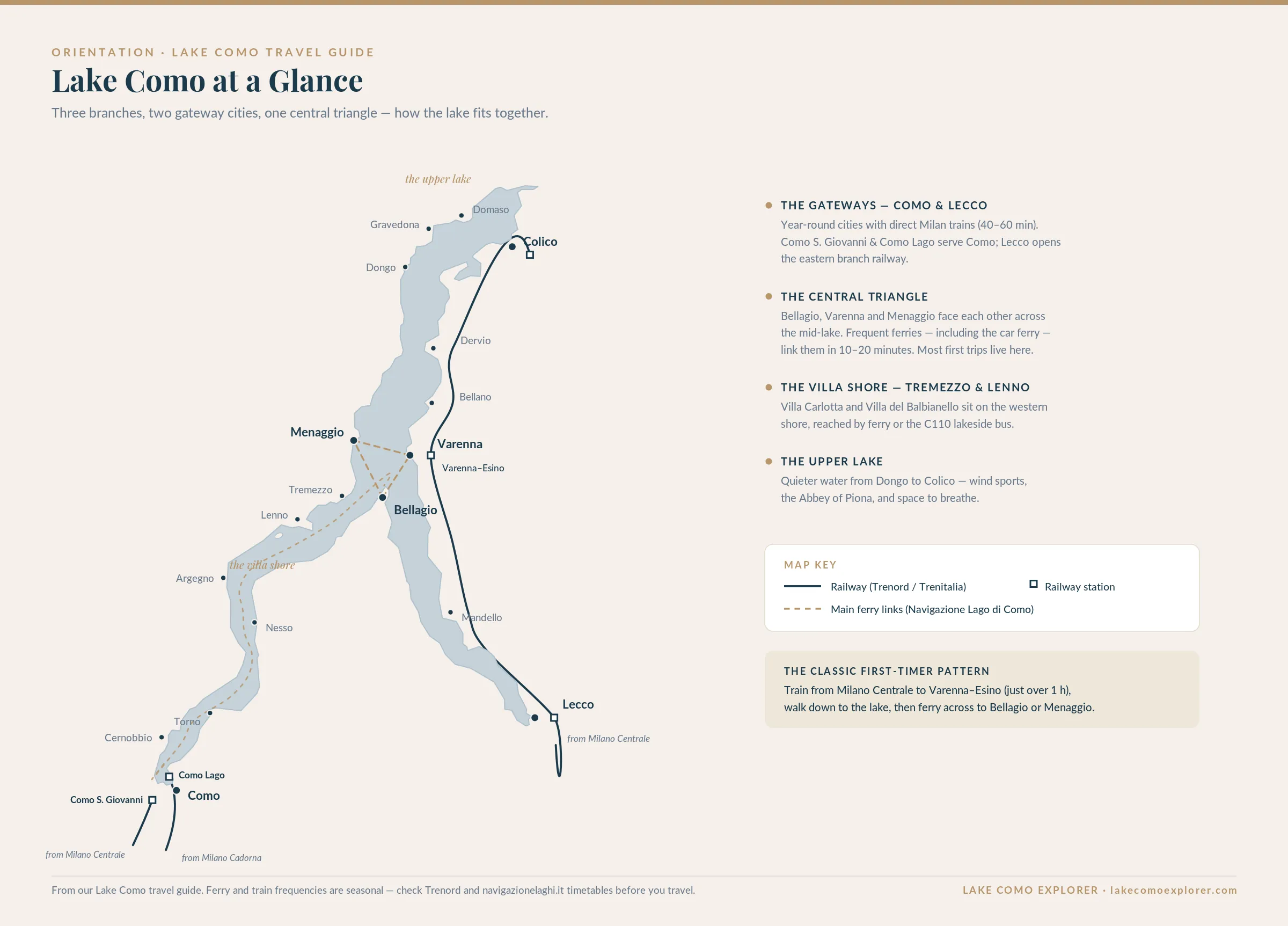
Lake Como (Italian: Lago di Como) has a distinctive upside-down “Y” shape. Knowing this shape and the basic layout of the lake makes every other decision easier when you plan a trip to Lake Como.
South-west branch: Ends in the city of Como, often called the town of Como in English travel guides.
South-east branch: Ends in Lecco, another local city on Lake Como.
Northern branch: Points towards the Alps and the upper Lake Como area around Colico.

At the centre, where the three branches meet, is the famous mid-lake triangle – with Bellagio on the tip of the promontory and Varenna and Menaggio facing each other across the lake. Nearby villages such as Tremezzo and Lenno line the western shore of Lake Como and are home to some of the most important villas.
Distances on the map look small, but roads along the shore of Lake Como are narrow, and traffic can be slow. In practice, the best way to travel around Lake Como is often a combination of ferries, local trains and short bus rides.
Planning shortcut: Como and Lecco are the main gateways; Bellagio, Varenna and Menaggio form the central triangle; Tremezzo and Lenno are the villa-focused western shore. Once you see the lake in these zones, planning a trip becomes much simpler.
3. Choose Where to Base Yourself
Most trips work best from one base, with day trips to the rest of the lake. Here is a short, honest read on the main towns most first-time visitors consider — each has its own full guide if you want the detail.
Como is the lake’s grand gateway city — a Gothic Duomo, the Brunate funicular, Villa Olmo and a long silk-weaving history. It’s the easiest base if you’re arriving by train and want a real city around you as well as the lake.
Bellagio sits exactly where the lake divides into its two southern arms, and its stepped alleys, villa gardens and harbour have earned it the nickname “Pearl of the Lake.” It’s the most romantic base, and also the busiest in peak season.
Varenna, on the eastern shore, keeps its fishing-village character with a quieter waterfront than Bellagio directly across the water. A good pick if you want the central-lake location without the crowds.
Menaggio sits mid-lake on the western shore, facing Bellagio and Varenna, with a lakefront promenade, castle ruins and gorge walks nearby. A practical, less formal base with good ferry connections in every direction.
Tremezzo, further up the western shore facing Bellagio, is built around Villa Carlotta’s gardens and the lakefront Greenway path. The natural choice if villas and gardens are the main reason for your trip.
Lenno is the quiet bay next to Villa del Balbianello, with its own small beach and the Greenway running through it. Best for travellers who want to be a short walk from Balbianello without staying in a busier town.
Lecco, on the south-eastern branch, is the lake’s literary city — home to Alessandro Manzoni, with a medieval bridge and a dramatic mountain backdrop. Generally calmer and better value than the central-lake towns.
For a full side-by-side comparison and help narrowing it down, see our guide to where to stay in Lake Como.
4. Choose How to Move
Once you know your base, the next decision is how you’ll get to Lake Como and move around it. In short: the train from Milan reaches Como or Varenna directly; ferries are the main way to move between lakeside towns once you’re here; and a car is only worth it if you plan to explore the smaller back roads and hilltop villages, since parking is limited and roads along the shore are narrow.
For the details you’ll actually need on the day — routes, ticket types and timing — see our ferry guide, our guide to driving and parking around Lake Como, and our guide to getting from Milan and the airports to Lake Como.
Lake Como Ferry Schedules & Day Planner
Real departure times for every stop on the lake.
5. Choose the Season
Lake Como changes noticeably through the year. Late spring and early autumn generally offer the most comfortable balance of weather and crowds; summer is warmest and busiest, especially around Bellagio in August; winter is quiet, with some seasonal businesses closed, but the towns themselves stay open and the mountain views can be at their clearest. Rain is possible in any season, so it’s worth having a backup plan rather than building a day entirely around being outdoors.
For a season-by-season breakdown, see our guide to the best time to visit Lake Como. If your dates land on a wet day, our guide to Lake Como when it rains has a practical backup plan.
6. Choose How Much to Include
The most common planning mistake on Lake Como isn’t picking the wrong town — it’s trying to see too many of them in one day. The lake rewards a slower pace: two or three towns and one villa is a realistic, enjoyable day; five towns in one day usually means a lot of time on ferries and train platforms and very little time actually in any of them. If you only have one day, build it around the central triangle (Bellagio, Varenna, Menaggio) rather than trying to reach the whole lake.
7. Start with the Right Detailed Guide
Each decision above has its own in-depth guide. Start with whichever one matches what you still need to plan.