

Where to Stay in Lake Como: Best Towns and How to Choose Your Base
Planning a first trip to Lake Como can feel confusing. On a map, everything looks close. In real life, steep hills, narrow lakeside roads, and seasonal ferry frequencies are what shape your days. Choosing the right base is what turns Lake Como from a rushed checklist into an actual holiday: fewer transfers, more time on the waterfront, and evenings that end where you want them to end.
In this guide
- 01Lake Como towns at a glance
- 02At a glance
- 03How to choose the best area to stay…
- 04Getting around
- 05Como City
- 06Varenna
- 07Bellagio
- 08Menaggio
- 09Tremezzo, Lenno & the central western…
- 10Cernobbio and the southern shore
- 11Lecco and the eastern arm
- 12The northern lake
- 13Smaller towns and villages
- 14Realistic itinerary patterns by base
- 15FAQ
- 16Final thoughts
This is a practical guide to the best towns and areas to stay around the lake, written for real planning rather than photo browsing. By the end, you will know which base fits your travel style, how transport actually works between different parts of the lake, and how to build a realistic itinerary without losing hours to queues, traffic, or avoidable backtracking.
Lake Como towns at a glance
| Town | Best for | Train | Ferry | Car-free | Scenery | Price | Crowds |
|---|---|---|---|---|---|---|---|
| Como | City base, nightlife, easy Milan access | Direct from Milan | Southern hub | Excellent | Elegant city + lake | €€–€€€ | High |
| Bellagio | Iconic views, romance | None (ferry/bus) | Central hub | Good | Classic postcard | €€€ | Very high |
| Varenna | Romantic, walkable, car-free | Direct (waterfront station) | Central | Excellent | Colourful, intimate | €€–€€€ | High |
| Menaggio | Relaxed central base, families | None | Central hub | Good | Open lake, promenade | €€ | Medium |
| Tremezzina (Lenno/Tremezzo) | Villa visits (Balbianello, Carlotta) | None | Central-west | Moderate | Gardens & villas | €€–€€€ | Medium–High |
| Lecco | Budget, authentic, mountains | Direct from Milan | Limited (east branch) | Good (by train) | Urban + peaks | €–€€ | Low |
| Cernobbio | Luxury, close to Como | Via Como | Southern | Good | Grand villas | €€€ | Medium |
| Argegno | Quiet, budget, Pigra cable car | None | Western | Moderate | Steep, tranquil | €–€€ | Low |
| Colico | Watersports, budget, far north | Direct (north line) | Northern end | Moderate | Open, breezy, mountains | € | Low |
Directional guidance to compare bases at a glance. Train and ferry frequencies vary by season — always check current timetables before you travel.
At a glance: pick your base in 60 seconds
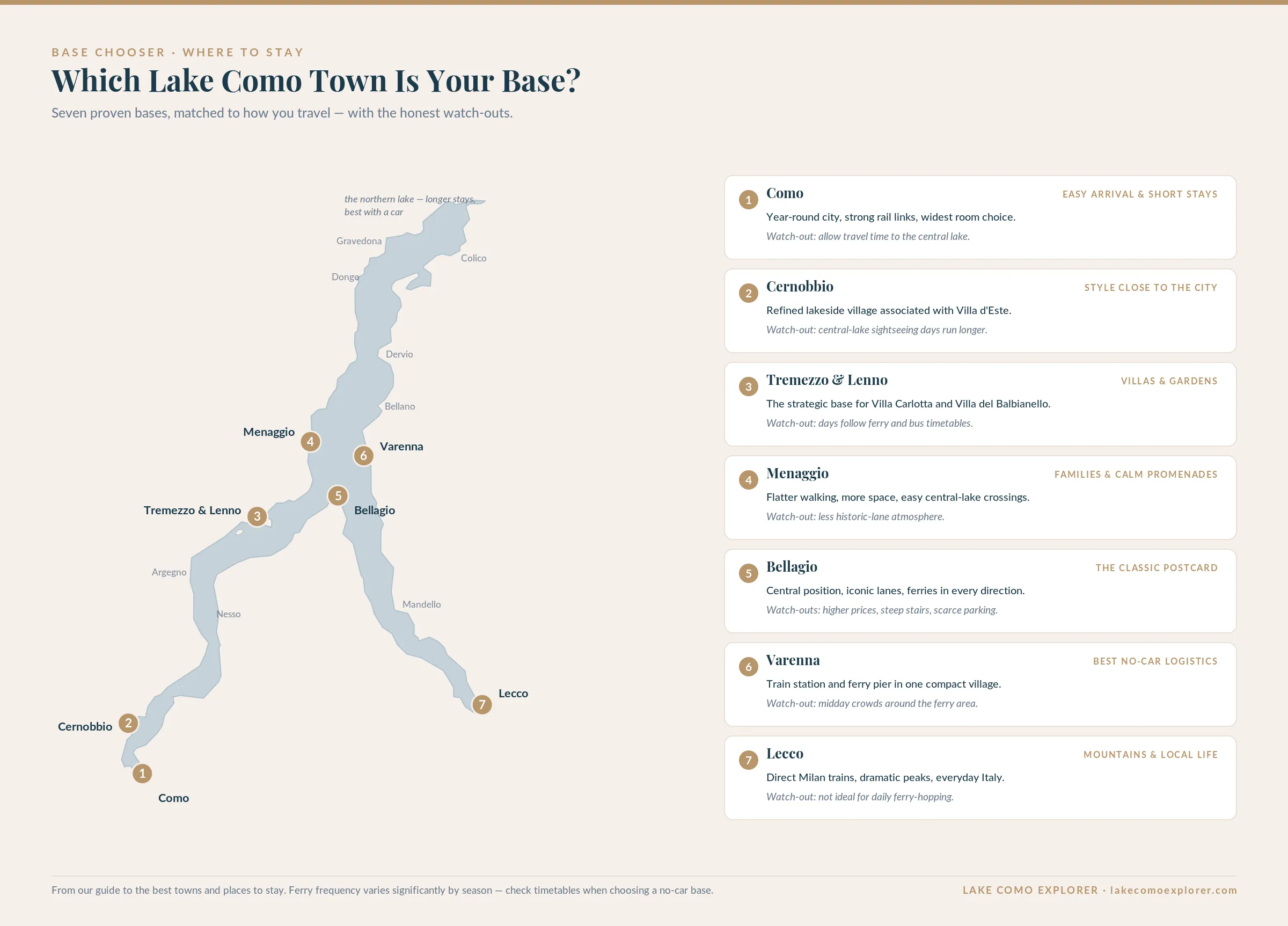
If you want the fastest decision, match your base to your main constraint: short trip length, travelling without a car, visiting villas, travelling with family, or visiting outside peak season.
Easy arrival + short stay – Como City: Year-round services, strong rail connections, and the widest accommodation choice on the lake. Best if convenience matters most.
Watch-outs: You will travel north for the classic central-lake villages.
No car + best logistics – Varenna: Train station and ferry pier in one compact village, ideal for first-time visitors without a car.
Watch-outs: Summer midday crowds around the ferry area; early starts help.
Classic postcard feel – Bellagio: Central position with strong ferry links and iconic lanes and views.
Watch-outs: Higher prices, steep stairs, and limited parking.
Families + calmer promenade – Menaggio: Flatter walking, more space, and easy crossings in the central ferry network.
Watch-outs: Less historic-lane atmosphere than Bellagio or Varenna.
Villas & gardens focus – Tremezzina / Lenno: Strategic position for Villa Carlotta and Villa del Balbianello.
Watch-outs: Ferry and bus timing matters; summer road traffic can slow plans.
Luxury near Como – Cernobbio: Refined lakeside setting with quick access to Como and major roads.
Watch-outs: Central-lake sightseeing days are longer.
Mountains + local atmosphere – Lecco: Direct trains to Milan and dramatic mountain scenery.
Watch-outs: Not ideal for daily central-lake ferry hopping.
How to choose the best area to stay in Lake Como
Before choosing a town, clarify four planning factors that shape how smoothly your days unfold rather than how good a place looks in photos.
Length of stay: One or two nights reward convenience; longer stays reward scenery and slower pacing.
Transport style: Fully public transport or a rental car changes which bases are practical.
Mobility comfort: Many villages are steep, and “lake view” often means uphill walking.
Evening atmosphere: Decide between lively towns with services and quieter places with early nights.
Think in terms of time rather than distance. Even short crossings can become long days once you add walking to docks, ticket queues, waiting between sailings, and crowd pressure in peak season. The right base reduces these hidden time costs. Lake Como is not a continuous lakeside strip but three branches plus a central crossing zone. Central-lake village hopping works best from bases connected to that network, villa-focused itineraries work best from the western shore, and winter reliability depends on year-round services.
A planning rule that consistently helps
Most days work best with one anchor (a town, a villa, or a walk) plus one supporting stop (a viewpoint, promenade, or relaxed lunch). Trying to cover too much in one day is the most common source of stress on Lake Como.
Getting around: trains, ferries, buses, and driving
Trains: Trains are often the easiest way to reach the lake. Como San Giovanni and Como Nord Lago serve Como, while Varenna–Esino–Perledo connects directly to the central lake. Lecco offers frequent direct services to Milan and works well as a rail-based base.
Ferries and boats: Boat services are operated by Navigazione Lago di Como and run on seasonal timetables, so it is essential to check the schedule that applies to your travel period. Fast services make fewer stops, while car ferries concentrate on the Bellagio–Varenna–Menaggio–Cadenabbia network. Staying close to a dock gives you more control over timing, especially in busy months.
Buses: Buses are essential on the western shore and in smaller towns without train access. In summer, narrow roads can slow journeys, so itineraries that rely on multiple tight bus connections are risky.
Driving: Driving adds flexibility for viewpoints, hill towns, and day trips beyond the lake, but comes with narrow roads, limited parking, and congestion. Accommodation with guaranteed parking makes a major difference.
Como City – best for first-timers and short stays
Como City is the most forgiving base for a first visit, especially on a short trip. It offers year-round life, strong rail connections, and the widest range of accommodation, and works well in shoulder season or winter when smaller resort towns can feel limited. From here, a realistic plan mixes local sightseeing with one focused central-lake day rather than trying to cover everything.

Hotel example (reference point): Hilton Lake Como is often used as a benchmark for modern comfort and amenities, though location and parking should always take priority over brand.
Best for: first-timers, short stays, off-season travel.
Less ideal for: travellers seeking a small-village feel every evening.
Varenna – romantic village with the best no-car connections
Varenna combines train access and ferry crossings in a compact village, making it one of the easiest no-car bases on the lake. Once you arrive, most essentials are walkable. It balances logistics, classic scenery, and in-town sights such as Villa Monastero and the walk up to Castello di Vezio. Crowds peak around midday near the ferry, but early starts and later returns usually restore calm.

Hotel example (reference point): Hotel Royal Victoria represents the traditional lakeside style many travellers associate with Varenna.
Best for: first visits, no-car travel, scenic village stays.
Less ideal for: travellers seeking complete quiet in peak summer.
Bellagio – postcard lanes and classic central-lake views
Bellagio sits at the junction of the lake’s branches and delivers the iconic Lake Como image. It works best for travellers who plan to explore by ferry and on foot rather than by car. Steep lanes, higher prices, and limited parking are the trade-offs for its atmosphere, but Bellagio rewards slower days built around strolling, ferry crossings, and lakeside dining.
Best for: classic scenery, ferry-based exploration.
Less ideal for: driving-heavy itineraries or tighter budgets.
Menaggio – relaxed base with room to breathe
Menaggio offers a more open feel with a pleasant promenade and easier walking than many central villages. It works well for families and travellers who want central-lake access without intense crowd pressure.
Best for: families, balanced itineraries, mixed ferry and driving days.
Less ideal for: those seeking dense historic lanes.

Tremezzo, Lenno & the central western shore – villas and gardens
The central western shore is ideal for villa-focused trips, as staying here reduces travel friction for Villa Carlotta and Villa del Balbianello. Opening days and access methods are seasonal, so planning around official calendars matters. Ferry connections exist, but days are more timetable-driven than in Varenna or Bellagio.
Best for: villas and gardens, slower pacing.
Less ideal for: travellers who want train access or nightlife.
Cernobbio and the southern shore – stylish bases near Como
Cernobbio offers a refined lakeside atmosphere close to Como, often associated with landmark properties such as Villa d’Este. It suits travellers who want polished surroundings and easy road access.
Best for: luxury stays, quiet evenings near Como.
Less ideal for: daily central-lake village hopping.
Lecco and the eastern arm – local life and mountains
Lecco feels more local and mountain-oriented, with strong rail links and access to hiking. It works best when paired with one classic central-lake day rather than constant ferry hopping.
Best for: mountains and lake mix, value-focused travel.
Less ideal for: central-triangle-heavy itineraries.
The northern lake – wind, space, and a different rhythm
The northern lake offers space, wind, and a slower pace. It suits longer stays and travellers with a car. Transit to the central lake takes longer, so it is less efficient for first-time, village-focused trips.
Smaller towns and villages – peaceful bases outside the main hubs
Smaller towns offer tranquillity but require careful planning. Ferry frequency, elevation, and seasonal service levels vary significantly. Quiet bases work best with simpler daily plans and fewer moves.
Realistic itinerary patterns by base
Staying in Como (2–3 nights): Day 1: Como historic centre and lakeside walk. Day 2: One central-lake day, limiting yourself to two towns. Day 3: Cernobbio or a nearby day trip.
Staying in Varenna (3–4 nights): Day 1: Varenna and Villa Monastero. Day 2: Bellagio and Menaggio by ferry. Day 3: Western shore villa day.
Staying in Bellagio (3–4 nights): Day 1: Bellagio lanes and gardens. Day 2: Varenna by ferry. Day 3: One western shore villa.
Staying in Tremezzina / Lenno (3–5 nights): Day 1: Local villa visit. Day 2: Central-lake crossing. Day 3: Slow lakeside day.
FAQ: practical questions about where to stay on Lake Como
Is it better to stay in Como or Bellagio? Como offers convenience and year-round reliability, while Bellagio offers classic scenery and ferry access. Splitting your stay can work well.
What is the best base without a car? Varenna combines train and ferry access in a compact village.
Where should I stay to visit the villas? The central western shore around Lenno and Tremezzo reduces travel friction.
Which town works best for families? Menaggio offers flatter walking and a calmer atmosphere.
Which base is best in winter? Como remains the most reliable off-season base.
How long should I stay? Two to three nights cover the essentials, while four to five allow a more relaxed pace.
Are ferries available year-round? Yes, but frequency varies significantly by season.
What is the biggest first-timer mistake? Trying to see the entire lake in too little time.
Final thoughts
Lake Como is a collection of places with distinct rhythms. Como is practical and flexible, Varenna is the strongest no-car base, Bellagio delivers classic atmosphere, Menaggio offers breathing room, the western shore suits villa-focused trips, and Lecco brings mountains and local life. Choose the base that matches how you like to travel, plan fewer moves, and give each day space. That single decision is what makes Lake Como feel effortless rather than rushed.